Explore our foundational range of heavy-duty dollies and baggage transport equipment, crafted to endure intense high-frequency airport ground operations.
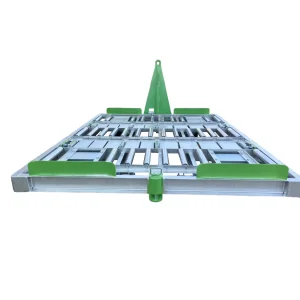
Heavy-duty flatbed pallet dollies optimized for cargo transport hubs, featuring multi-directional rollers and robust brake assemblies.
View Specifications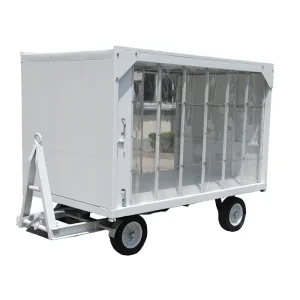
All-weather enclosed baggage carts designed to safeguard passenger luggage from extreme environmental exposures during apron transit.
View Specifications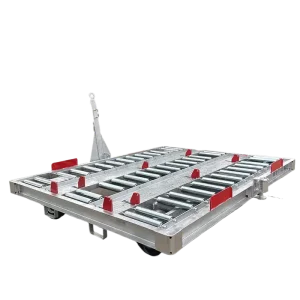
High-capacity 7-ton cargo dollies featuring reinforced steel structures, built to withstand the rigorous demands of global air freight lines.
View Specifications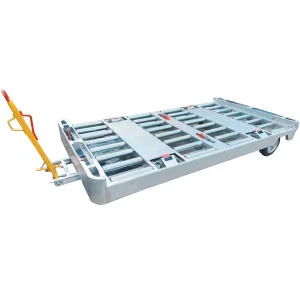
Configurable, high-tensile container dollies built to match individual logistics center constraints and towline geometries.
View Specifications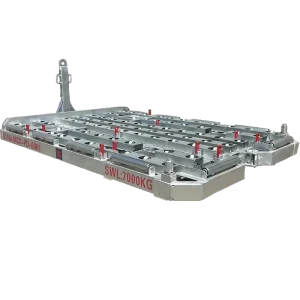
Innovative castle-style configurations that guarantee perfect container alignment, preventing slipping during rapid ramp handling operations.
View Specifications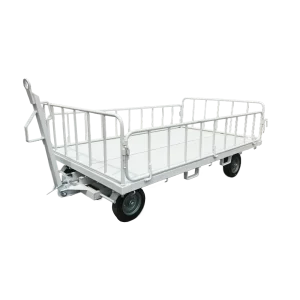
Standard airport luggage trailers equipped with responsive mechanical tow-bar brakes for absolute safety on steep service slopes.
View Specifications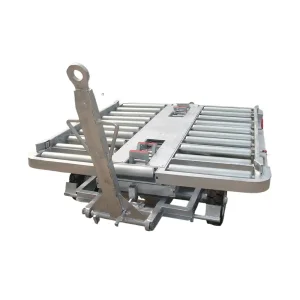
Precision-engineered dollies tailored specifically for standardized LD3 container formats, featuring seamless 360-degree rotation systems.
View Specifications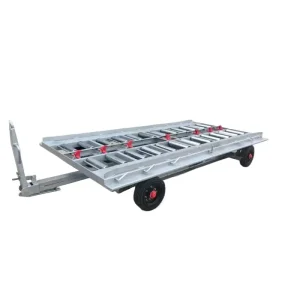
High-grade LD6 shipping container transit units, featuring wear-resistant materials and reinforced corner guides for fast container swapping.
View SpecificationsIn the high-stakes environment of global aviation operations, the efficiency of ground support equipment (GSE) directly dictates airline profitability, flight schedule integrity, and overall ramp safety. At the absolute core of this logistical machinery is the towing tractor. While electrification represents a clear industry ambition, wholesale diesel towing tractors remain the indispensable backbone of heavy-duty, long-range, and high-frequency cargo operations worldwide.
This industry analysis examines the mechanical, operational, and financial dimensions of diesel-powered towing equipment, highlighting why major airports, ground handlers, and logistics providers continue to prioritize diesel powertrains for heavy-duty towing operations.
Aviation towing operations are defined by high-resistance loads and varied surface friction coefficients. Whether maneuvering a heavily loaded cargo train of pallet dollies or pushing back a commercial aircraft, the towing vehicle must deliver massive, sustained torque at low speeds. This capability is quantified as Drawbar Pull (DBP).
Diesel engines naturally supply a high flat torque curve at lower RPM ranges compared to other options. This characteristic enables precise control and high initial breakout force when pulling trailers. When paired with high-performance automatic transmissions (such as Allison or Dana Spicer torque converters), diesel towing tractors maximize power transfer to the drive wheels without slipping, reducing mechanical wear on the driveline and preventing sudden jolts that could compromise container locks or aircraft linkages.
Modern mega-hubs operate around the clock. The turnaround time of aircraft is squeezed to minimize ground time, demanding that support vehicles run continuously with minimal interruptions. Here, diesel powertrains offer significant advantages:
Our structures undergo rigorous finite element analysis (FEA). By distributing stresses evenly across high-tensile steel frames, we increase frame life and ensure driver safety during heavy towing.
Each unit undergoes dynamic load tests and safety evaluations. By aligning with IATA AHM 913 collision-prevention standards, we help operators significantly reduce ramp incidents.
With an optimized supply chain and robust production lines, we guarantee prompt manufacturing turnarounds and on-time international delivery, even under tight project timelines.
Peak Drawbar Pull Capability
Average Operational Reliability Rate
Clean-Diesel Emission Compliance
Global Logistic Network Footprint
Global procurement teams at leading airlines and logistics operations face a balancing act. They must balance environmental stewardship, immediate operational performance, and strict cost controls. When looking for wholesale diesel towing tractors, experienced purchasing managers evaluate several key criteria:
Total Cost of Ownership (TCO) Analysis: While the upfront price is important, it represents only a fraction of lifetime costs. Sourcing managers calculate maintenance costs, fuel consumption curves, components wear rates, and residual asset values. Modern diesel engines with electronic fuel injection and smart engine control units (ECUs) deliver high fuel efficiency, lowering lifetime operating expenses.
Global Compliance and Local Support: Procurement teams must confirm that diesel powerplants comply with regional emissions rules, such as EU Stage V or EPA Tier 4 Final standards. Additionally, the availability of nearby service hubs and replacement parts is crucial. Choosing tractors designed with standardized, globally recognized engines (like Cummins, Deutz, or Perkins) ensures operations can quickly secure spare parts anywhere in the world, preventing extended downtime.
Operator Comfort and Ergonomic Safety: Operator fatigue is a major contributor to ramp accidents. Modern tractor designs prioritize enclosed cabins with heating and air conditioning (HVAC), suspension seats, responsive power steering, and clear 360-degree lines of sight. When operators work in a comfortable, low-vibration cabin, they stay focused, driving down accident rates and improving cargo turnaround times.
Our operations are designed to serve as a comprehensive partner for global aviation and logistical giants. As a dedicated GSE supplier, we stand by a clear set of services and assurances:
Furthermore, our robust OEM & ODM Services are structured around a customer-first approach. We manage every phase of the asset lifecycle—from initial conceptual planning, detailed design, prototyping, and stress testing, through to high-volume manufacturing and long-term aftermarket support. This comprehensive approach helps clients launch new equipment quickly, control costs, and maintain a competitive edge in their local markets.
Beyond towing tractors, modern airport operations require a wide array of specialized vehicles and systems to ensure swift turnaround times and passenger safety:
| Equipment Category | Common Models & Variants | Core Functional Applications |
|---|---|---|
| Aircraft Tank Refueling Trucks | CD5207GJJ, CD5580GJJ, CD5341GJJ | Equipped with advanced pumping, filtering, and metering systems to enable secure fuel transfers under precise pressure control. |
| Pallet & Container Dollies | Slave Pallet Dolly, 7T Castle Dolly, LD3/LD6 Dollies | Heavy-duty rollered platforms designed for standard air cargo containers, optimizing container flow across the ramp. |
| Baggage Trailers & Carts | Rainproof Luggage Cart, Enclosed Baggage Carts | Designed to protect checked luggage from rain, snow, and crosswinds during transit from terminal to aircraft. |
| Airfield Cabin Temperature Units | Aircraft Heating Unit CDH-60, PCA Unit CD190, Cabin Heater | Supplies conditioned air directly into aircraft cabins during ground operations, saving fuel by reducing auxiliary power unit (APU) run times. |
| Passenger Boarding Systems | CD-PBS5062E, CD-PBS5062D, CD-PS580 Stairs | Self-propelled and towable passenger boarding stair units, designed with non-slip steps and safety interlocks. |
| Aircraft Ground Power Units | Energy Storage GPU, 90KVA Solid-State Ground Power | Delivers clean, reliable external electrical power (400Hz AC or 28V DC) directly to parked aircraft. |
| Air Start Units (ASU) | Truck-Mounted ASU, CDA300, CDA400 Units | Generates high-pressure pneumatic air flow to start main aircraft turbine engines. |
| Catering & Ambulift Vehicles | CD-SP80 Catering Truck, CD-Q5100DCR Ambulift | High-lift scissor platforms that facilitate cabin provisioning and comfortable aircraft access for passengers with reduced mobility. |
Modern fleet managers do not view towing tractors as isolated machines. Instead, they are key nodes in a fully connected GSE network. Fleet telematics systems are transforming ground operations in several key areas:
Predictive Maintenance Protocols: By monitoring engine diagnostics, transmission oil temperatures, hydraulic pressures, and exhaust backpressures in real time, fleet management systems can predict component wear. Maintenance teams are alerted before a part fails, scheduling repairs during planned downtime and avoiding costly breakdowns on the active ramp.
Geofencing and Dynamic Routing: Integrating GPS tracking with airport routing software optimizes vehicle utilization. Dispatchers can route towing tractors to the nearest active cargo stand, reducing fuel consumption, tire wear, and unnecessary emissions.
Safety Monitoring and Incident Analysis: Built-in shock sensors and driver behavior monitors help identify hard braking, speeding, and impact events. Ground handling managers can use this data to develop targeted operator training programs, fostering a culture of safety and reducing ramp collision damage.
As the aviation industry works toward net-zero ground operations, the roadmap for towing equipment is evolving rapidly. We are actively investing in several key technologies to support this transition:
Explore our high-capacity cargo dollies, heavy-duty towing tractors, and specialized airport service vehicles built for demanding ground handling operations.
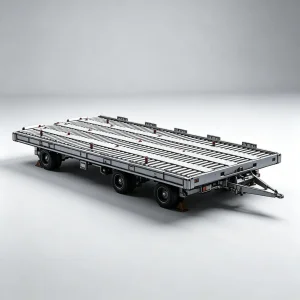
Designed for extra-heavy air cargo containers, this unit features a multi-axle configuration and an reinforced structural steel chassis.
View Specifications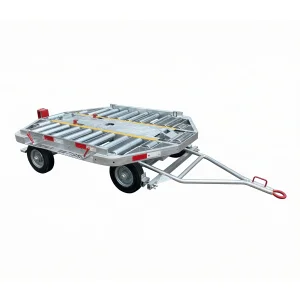
Features dual-directional lock mechanisms and low-maintenance rollers, optimized for high-volume cargo sorting facilities.
View Specifications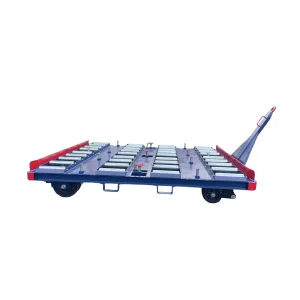
Versatile 10-foot cargo dollies with heavy-duty swivel casters, supporting smooth transport of standard industrial pallets.
View Specifications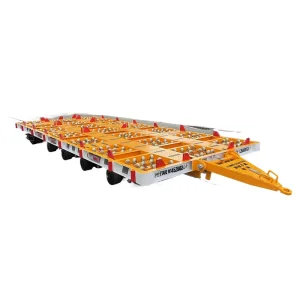
High-capacity 20-foot pallet dollies featuring heavy-duty structural steel platforms, built to handle outsized commercial air freight.
View Specifications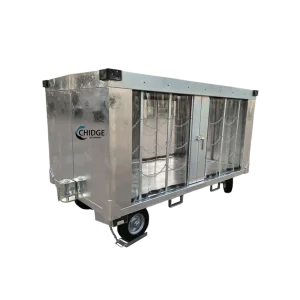
Weatherproof passenger baggage carts equipped with durable vinyl curtains and corrosion-resistant hot-dip galvanized chassis frames.
View Specifications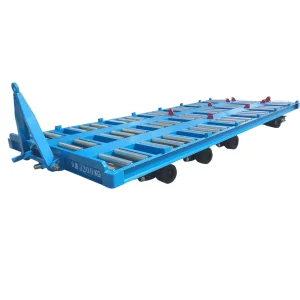
Customizable 18-ton heavy cargo dollies configured for efficient integration with automated high-bay airport warehouse systems.
View Specifications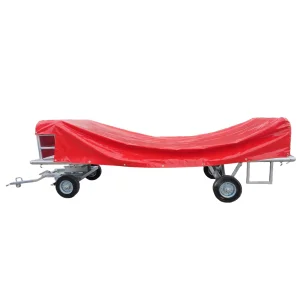
Durable, light-maneuverability airport baggage carts designed for high-density nesting, optimizing terminal storage layout footprints.
View Specifications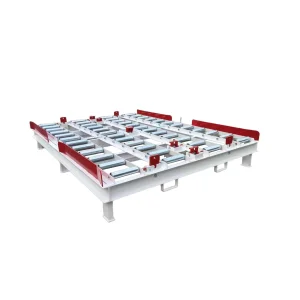
Specialized slave dollies designed for warehouse handling operations, streamlining container loading without requiring forklift re-pitching.
View SpecificationsGet answers to common technical, operational, and regulatory questions about our diesel towing tractors and ground support equipment.
Drawbar Pull (DBP) is calculated based on the engine's peak torque output, transmission ratios, differential axle ratios, static tire radius, and the tractor's overall weight distribution. As a rule of thumb, the maximum drawbar pull of a rubber-tired vehicle operating on dry concrete is limited to roughly 50% to 75% of the static weight on its driving wheels, depending on the tire tread design and ground conditions.
Yes. Our towing tractors can be configured with premium diesel powerplants from Cummins, Deutz, or Perkins that feature advanced Selective Catalytic Reduction (SCR) and Diesel Particulate Filters (DPF). This ensures full compliance with European Stage V and EPA Tier 4 Final emissions regulations, allowing operations in environmentally regulated zones.
Our tractors feature multiple safety systems, including auto-parking brake systems that engage automatically if the driver leaves the seat, emergency power-off buttons, anti-slip cabins, high-visibility LED beacons, and optional sonar-based collision avoidance sensors that comply with IATA AHM 913 guidelines.
While diesel tractors are primarily designed for outdoor apron use, models equipped with active Diesel Particulate Filters (DPF) and low-emission engines can operate in well-ventilated indoor cargo transfer bays for short periods. For indoor-only or enclosed facility operations, we recommend our specialized high-performance electric towing tractor range.
We build our tractors using internationally recognized, standardized components for engines (e.g., Cummins), transmissions (e.g., Allison), and hydraulics. This allows maintenance teams to source replacement parts from local distributors worldwide, minimizing shipping delays and keeping your fleet operational.
 Chidge Dolly