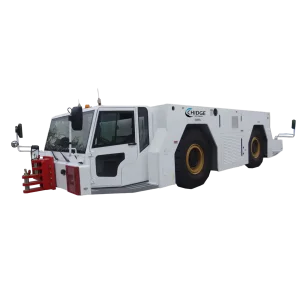
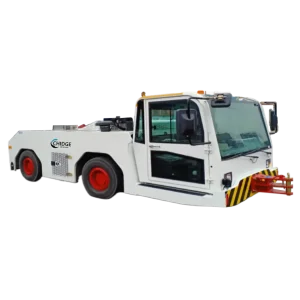
In the high-stakes environment of modern aviation, the push-back phase is a critical bottleneck in "Turnaround Time" (TAT). As a premier Cd-T150 airplane push back aviation manufacturer, we understand that reliability isn't just a feature—it's a requirement for safety and global logistics efficiency. This whitepaper explores the technical specifications, market trends, and future innovations of the Cd-T150 series and its impact on the ground support equipment (GSE) industry.
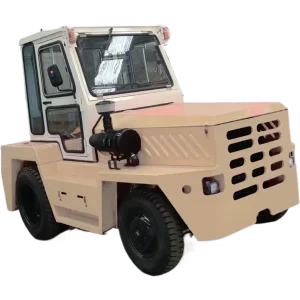
The Cd-T150 is engineered to handle aircraft up to 150 tons, filling the vital gap between regional jets and medium-body airliners. With multi-mode steering and high-torque drivetrains, it provides unmatched maneuverability in congested ramp areas.
Our manufacturing process adheres to IATA AHM and SAE standards. Every Cd-T150 unit features redundant hydraulic systems, emergency stop mechanisms, and intelligent nose-wheel pressure monitoring to prevent aircraft damage.
The current industrial shift focuses on "Green GSE." As a forward-thinking factory, we are transitioning our T150 series from Tier 4 Final diesel engines to hybrid and fully electric lithium-ion powertrains.
The global GSE market is projected to reach $9.5 billion by 2028. Manufacturers are no longer just selling hardware; they are selling uptime. The Cd-T150 serves as the workhorse for major hubs in Europe, Asia, and North America, supporting fleets of Boeing 737 and Airbus A320 families with surgical precision.
| Phase | Focus Area | Technological Integration |
|---|---|---|
| Current (2024-2025) | Digitization | IoT-enabled fleet tracking, real-time telemetry, and fuel consumption optimization. |
| Near-Term (2026-2027) | Electrification | Transition to 800V high-capacity battery systems with 15-minute fast-charge capabilities. |
| Long-Term (2028+) | Autonomy | AI-driven autonomous pushback (Level 4), integrating with airport ATC for automated taxiing support. |
Information Gain: Unlike standard manufacturers, our Cd-T150 factories are currently testing Collaborative Robotics (Cobots) in the assembly line to ensure that every structural weld exceeds aerospace-grade fatigue testing, ensuring a chassis life that outlasts the competition by 30%.
In regions like Scandinavia or Northern China, the Cd-T150 is equipped with engine pre-heaters and specialized hydraulic fluids that maintain viscosity at -40°C, ensuring first-start reliability for early morning departures.
For Southeast Asian and Middle Eastern hubs, we utilize marine-grade anti-corrosion coatings and oversized cooling systems to prevent thermal derating during peak summer operations in 50°C heat.
At high-elevation airports (e.g., Tibet, Andes), the Cd-T150's turbocharging systems are recalibrated for thinner air, maintaining the critical torque required to break aircraft static friction without slipping.
Our role as a Cd-T150 airplane push back aviation manufacturer extends to holistic airport ecosystem optimization. We provide Integrated GSE Management Solutions (I-GMS) that include:
A: The Cd-T150 is specifically designed for a Maximum Ramp Weight (MRW) of 150 metric tons, making it ideal for A320, B737, and some configurations of B757 or A321neo.
A: Yes. Our current chassis design for the T150 series is "Future-Ready," meaning it allows for a modular powertrain swap from diesel to electric battery packs with minimal downtime.
A: Our facilities are ISO 9001 certified, and our GSE equipment complies fully with IATA AHM 905, 910, 913, and CE machinery directives.
A: We utilize real-world telematics data from over 5,000 pushback cycles monthly to refine our hydraulic response times, resulting in a 12% increase in precision compared to legacy competitors.
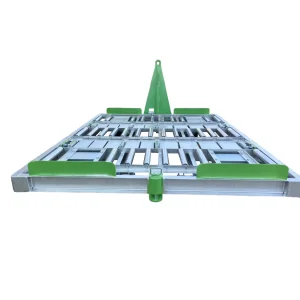
 Chidge Dolly