Explore our industry-certified heavy transport dollys and aviation cargo handlers utilized in critical regional hubs worldwide.
In modern commercial and military aviation logistics, safety, precision, and velocity are non-negotiable. Aircraft towing tractors (commonly referred to as pushback tugs) represent the foundational engine behind ground handling efficiency. The China Cd-T150airplane Towing Tractors Aviation Manufacturers & Factory environment has evolved to supply highly reliable, heavy-duty towing units engineered to manage complex apron maneuvers under intense turnaround timelines.
The CD-T150 Aircraft Towing Tractor is designed to service narrow-body to medium-widebody aircraft. Featuring a high drawbar pull (DBP), optimal hydrostatic transmissions, and ergonomic dual-cabin operator controls, this tractor ensures that airlines, military hangars, and third-party Ground Support Equipment (GSE) operators can execute pushback operations safely, avoiding expensive structural damage to landing gears and minimizing fuel consumption of taxiing aircraft.
Fully compliant with IATA AHM 910, 913, and AHM 955 international standards, guaranteeing maximum protection for crews and aircraft assets.
Equipped with reliable Deutz/Cummins heavy industrial diesel engines or state-of-the-art Lithium-ion powertrains to match demanding airport operations.
Engineered to function optimally in diverse environmental extremes—from freezing Scandinavian runways to hot and humid Middle Eastern aprons.
Chinese GSE factories have transformed from simple manufacturing units into global research and design hubs. Through extensive technology integrations, massive domestic metal-forming infrastructure, and optimized labor supply chains, Chinese manufacturers produce world-class aircraft towing vehicles at highly competitive price-to-performance ratios.
Key Industrial Advantages:
| Test Parameter | Standard Achieved | Global Equivalency |
|---|---|---|
| Drawbar Pull (DBP) | Up to 120 - 150 kN | NATO GSE Standards |
| Hydraulic Fluid Integrity | ISO 4406 Cleanliness 18/16/13 | SAE Aerospace specs |
| Emission Compliance | China Stage IV / Euro Stage V | EPA Tier 4 Final |
| Cabin Safety Structure | FOPS / ROPS Certified | EN 12312-7 Standard |
Our strategic manufacturing facilities export aircraft ground handling components to major airport operations in Europe, South America, Asia, and North America.
Our comprehensive manufacturing floor provides global airlines with highly durable auxiliary systems.
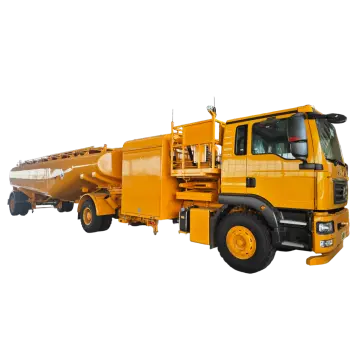
Equipped with high-performance pumping, filtration, and metering systems.
Request Quotation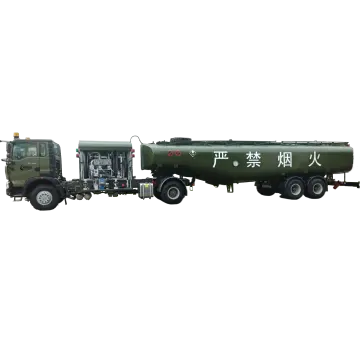
Heavy chassis integrated with advanced pressure controls & self-circulation.
Request Quotation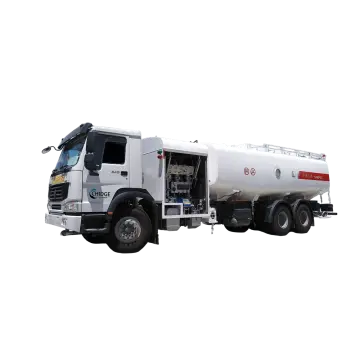
High-grade safety valves and dual meter configuration for international fueling.
Request Quotation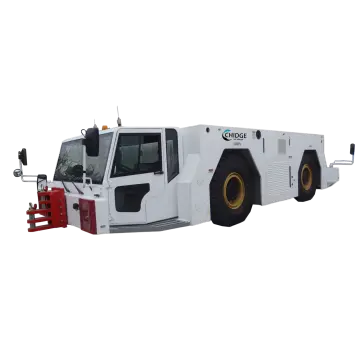
Heavy-duty model optimized for widebody passenger and cargo planes.
Request Quotation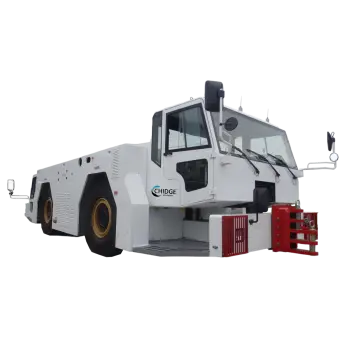
Mid-range performance tug built for heavy airport scheduling.
Request Quotation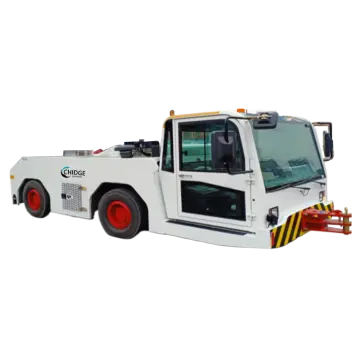
Compact and highly maneuverable tractor ideal for regional hubs.
Request Quotation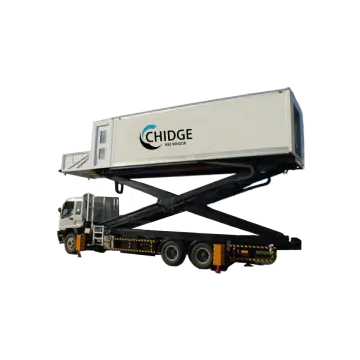
Reliable hydraulic scissors mechanism for quick cabin restocking.
Request Quotation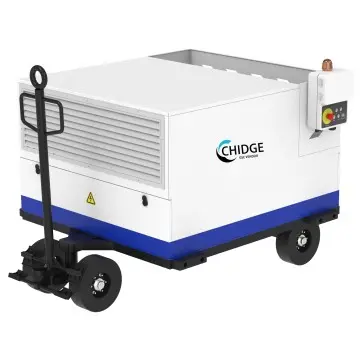
Clean energy unit supporting cabin pre-flight operations.
Request QuotationOperating environment parameters vary wildly from territory to territory. A towing tractor running pushback routines at Helsinki Airport faces completely different stressors than a tractor running similar operations at Cairo International. The CD-T150 is structurally engineered to adapt:
Equipped with auxiliary block heaters, high-viscosity hydraulic lubricants, and cabin heating manifolds, the CD-T150 operates down to -40°C. Heated windows guarantee the operator maintains absolute visual contact with the towbar and ground controllers.
In proximity to saltwater and heavy moisture, corrosion ruins critical chassis welds. Our factories treat structural steel components with multi-coat epoxy primer systems and hot-dip galvanization, preventing rust formation and ensuring a long vehicle life cycle.
Turbocharged diesel setups compensate for lower oxygen concentrations at high altitudes. The hydrostatic steering provides millimeter-level precision inside dense maintenance hangars, reducing steering errors and protecting wingtips.
The international ground handling landscape is pivoting rapidly. Procurement parameters now heavily weight Environmental, Social, and Governance (ESG) mandates and cost optimization factors:
Airports worldwide are committing to net-zero carbon goals. The market demand for pure electric towing tractors is skyrocketing. To address this, our manufacturing pipelines are designed to handle hybrid and electric configurations, minimizing emissions and engine noise levels.
Operational efficiency is maximized when dispatchers can track equipment real-time. Modern CD-T150 configurations feature integrated telematics systems, mapping battery charge status, engine load indicators, collision warnings, and predictive maintenance schedules.
To mitigate human error during complex towing routines, factories are testing LiDAR and multi-camera arrays that actively scan for obstacles during hangar transport routines. This tech integration minimizes tarmac incidents.
We understand that distinct airlines require customizable dimensions, safety equipment configurations, and operator setups. As a leading manufacturer, we support end-to-end customization services, translating raw operational requirements into deployment-ready assets.
Adjust gross vehicle weight (GVW) using modular cast iron counterweights to shift maximum drawbar pull characteristics for specific local fleets.
Choose from globally serviceable engine platforms such as Cummins, Deutz, or Perkins, ensuring your in-house mechanics have access to local spare parts.
Select from open-canopy driver environments for dry climates, to fully enclosed, climate-controlled cabins with duplicate steering wheels for bi-directional visibility.
Technical answers regarding the CD-T150 series to assist procurement managers and ground operation leaders.
The CD-T150 is engineered to handle pushbacks and tows for narrow to medium-widebody aircraft. It supports a maximum take-off weight (MTOW) of up to 150,000 kg (150 tons). This covers aircraft types such as the Airbus A320 family, Boeing 737 series, and regional jets.
The standard CD-T150 model is structured as a heavy-duty towbar-configured tractor, utilizing front and rear tow pin couplers. Customized models can be fitted with specialized attachments. For pure towbarless fleets, we advise consulting our design department for customized designs.
To guarantee seamless global servicing, we integrate international Tier-1 drivetrain and hydraulic elements (like Kessler axles, Dana transmissions, and Danfoss pumps). Ground mechanics can source spare parts through local global distribution channels, eliminating downtime.
Our factory holds ISO 9001 quality management, CE compliance certifications, and alignment with IATA AHM 910/913 ground handling specifications. We also supply certificates required by civil aviation administrations (such as CAAC, and documentation aligning with EASA standards).
Yes. We provide options for dual-control cabins or rotating driver consoles. This allows operators to easily shift driving perspective without executing difficult turnarounds, drastically boosting apron safety.
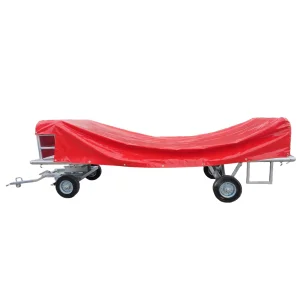
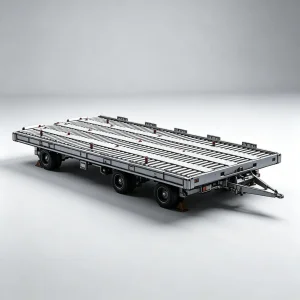
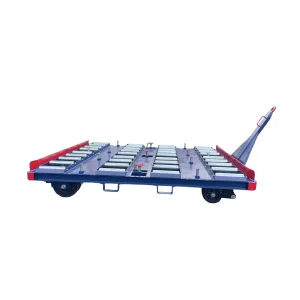
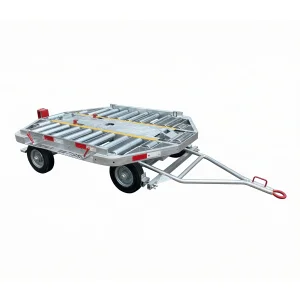
View our rugged luggage transport dollys, cargo trolleys, and passenger stairs designed for high-frequency operations.
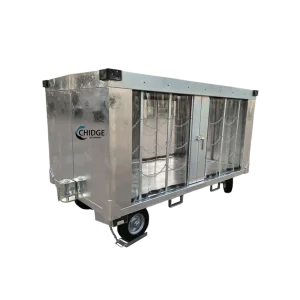
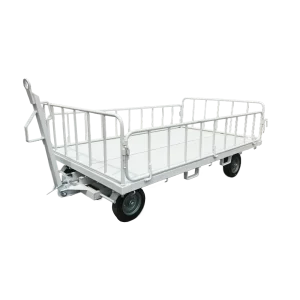
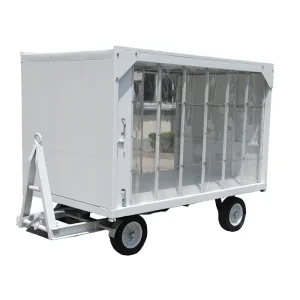
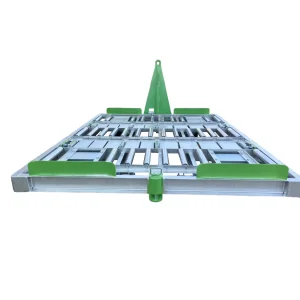
 Chidge Dolly