Explore our premium range of airport transit, baggage logistics, and heavy-duty cargo handling solutions engineered in our state-of-the-art Chinese manufacturing facilities.
Commercial and military aircraft require electrical power that is completely distinct from typical industrial grid utilities. To minimize airborne weight, aircraft power systems are designed around an ultra-high frequency standard of 115V / 200V AC at 400Hz. The use of 400Hz allows transformer coils and magnetic cores in generators, motors, and alternators to be significantly smaller and lighter than their standard 50Hz or 60Hz terrestrial counterparts.
When parked at gate terminals or in maintenance hangars, running main aircraft jet engines to generate onboard electrical power is highly inefficient, loud, and creates toxic ground emission zones. This is where high-precision Ground Power Units (GPUs) serve as the operational life-support link, converting commercial utility grid currents (usually 380V/400V/480V at 50Hz/60Hz) into clean, isolated, phase-regulated 400Hz output to support avionics, air conditioning, and navigation diagnostics.
As a leading Chinese supplier and manufacturing factory, we build solid-state frequency converters and diesel rotary systems that meet the rigorous criteria of military standards and civil aviation standards including DFS 400, ISO 6858, and MH/T 6018.
Technical performance metrics compiled by our research department comparing the two primary technology vectors of aircraft ground power supply.
| Operational Parameter | Solid-State Frequency Converter | Diesel Engine Rotary GPU |
|---|---|---|
| Frequency Conversion Efficiency | Up to 95% (High efficiency, low power loss) | Approx. 35% - 42% (Depends on fuel combustion) |
| Acoustic Noise Levels | Ultra-Silent (< 65 dB(A) at 1 meter) | Moderate to High (> 78-85 dB(A) at 7 meters) |
| Maintenance Overhead | Negligible (No moving parts, filters replaced annually) | High (Oil filters, engine maintenance, mechanical seals) |
| Typical Deployment Profile | Passenger bridges, indoor hangars, fixed gate arrays | Remote aprons, military runways, MRO field operations |
| Carbon Emissions | Zero direct emissions at point of use | Emits exhaust gases (regulated under Tier 4 / Stage V) |
| Service Life | > 15-20 Years (Modular components upgradable) | Approx. 10-12 Years (Mechanical wear limits longevity) |
Analyzing global airport infrastructure developments, environmental policies, and engineering breakthroughs shaping the GSE industry.
Aviation regulators worldwide are penalizing APU usage at passenger bridges due to carbon targets. This accelerates the deployment of solid-state 400Hz frequency converters powered by local renewable microgrids, resulting in zero emission turnarounds.
The latest integration standard pairs standard solid-state circuitry with integrated Battery Energy Storage Systems (BESS). Hybrid battery-towable GPUs deliver emission-free mobile power to remote stands without relying on underground conduits.
Equipping aircraft power units with smart modules allows operational engineers to monitor load metrics, phase imbalances, operating temperatures, and error diagnostics remotely from centralized control towers.
Whether you require heavy-duty passenger stairs, airport container dollies, or custom 400Hz frequency converter architectures, our Chinese manufacturing facility acts as a turnkey partner. We align our structural engineering and power electronics design with local aviation compliance schemes in Europe, America, and the APAC region.
Leveraging the latest simulation and safety design algorithms for stress, thermal dissipation, and electrical stability control.
Integrated logistics pipelines ensuring rapid containment, shipping, and on-site deployment to global destinations.
We collaborate with airlines, airport management firms, and aircraft maintenance contractors to design tailormade installations. Our operations adhere strictly to the customer-centric paradigm, covering design, testing, manufacturing, commissioning, and life-cycle spare part management.
Our partners rely on our dynamic production line capacities to scale fleet acquisitions and minimize turnaround carbon prints.
Our manufacturing complex possesses comprehensive capabilities in metal fabrication, precision machining, control-loop coding, and electrical testing to bring custom GSE ideas to market. We customize tow bars, baggage transport systems, container trailers, and aircraft heating systems to meet unique physical footprints, environmental conditions, and airport regulations.
"Our ultimate objective is to deliver long-term reliability and value, supporting airport operations in over 40 countries."




Detailed insights on the selection, deployment, and optimization of 400Hz aviation ground power networks.
At 400Hz frequency, the inductive impedance of output power cables is roughly eight times higher than standard 50Hz/60Hz cables. This causes significant voltage drops across the 10-to-30-meter cables running from the gate terminal to the aircraft power receptacle. Line Drop Compensation (LDC) dynamically monitors the load current and automatically boosts the output voltage at the source converter to ensure that precisely 115V AC is maintained at the aircraft interface plug, complying with ISO 6858 requirements.
Aircraft frequently draw asymmetrical currents across the three phases due to localized single-phase utility loads within the cabin. A high-quality solid-state frequency converter utilizes independent phase control topology. This allows the GPU inverter block to handle up to 100% unbalanced loads while keeping the phase displacement strictly at 120° ± 1° and the phase voltage divergence under 1%, protecting sensitive flight instruments.
Quality units must conform to international aviation engineering codes: ISO 6858 (Aircraft ground electrical requirements), DFS 400 (German military standards for ground supplies), SAE ARP 5015 (Standard practice for aircraft electrical installations), and MH/T 6018 (China Civil Aviation Trade Standard). These standards define constraints on harmonic distortion, voltage recovery times, transient spikes, and dynamic safety interlocks.
Properly designed GPUs include comprehensive system interlocks: "no break power transfer" (NBPT) compatibility, 28.5V DC output interlocking loops, over-voltage/under-voltage shutoffs, phase reversal protections, frequency drift protection, and plug temperature sensors. Ground loops prevent the unit from energizing the output cable until it detects a complete connection to the aircraft receptacle.
Industrial solid-state GPUs generate heat in the IGBT blocks and power transformers. For outdoor aprons reaching +55°C, our factory integrates forced air cooling systems with IP54 isolation. This isolates electrical control logic from particulate matter while directing heat out through dedicated heatsinks, preventing thermal throttling.
We provide a 12-to-24-month comprehensive component warranty on solid-state architectures. Commissioning is facilitated through remote engineering guidance or authorized local engineering partners. We deliver comprehensive electrical schematics, stress-test logs, and operations training modules to ensure seamless integration into local maintenance protocols.
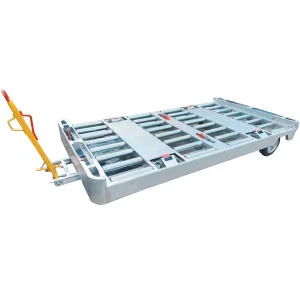
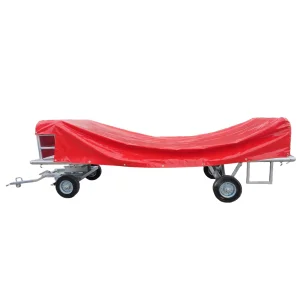
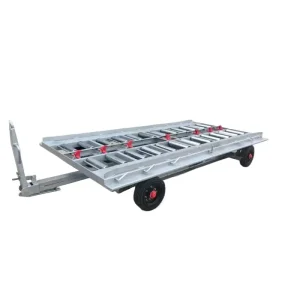
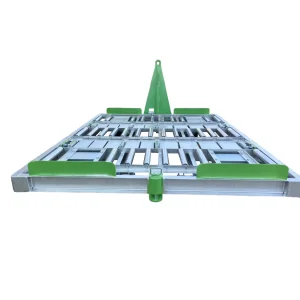
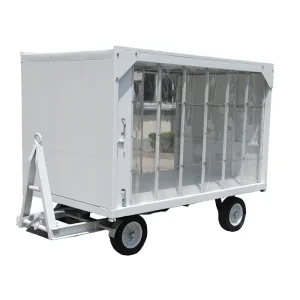
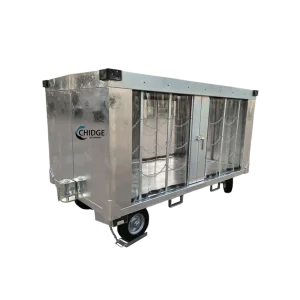
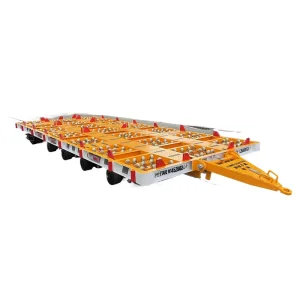
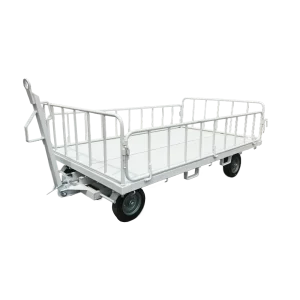
Select heavy cargo transit systems, slave dollies, and airport luggage carts from our main export line, built for long service life under heavy load conditions.
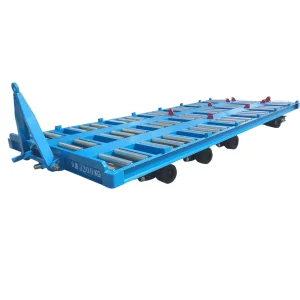
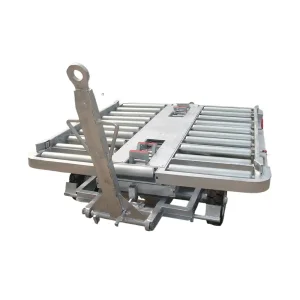
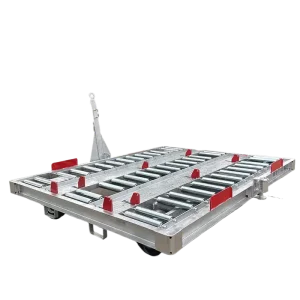
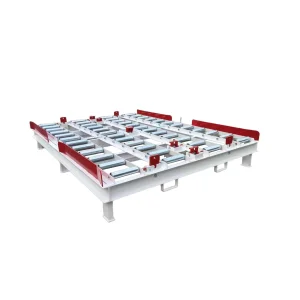
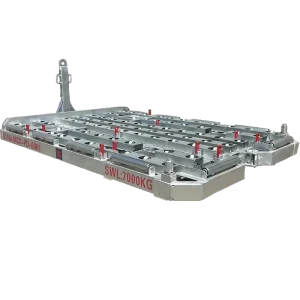
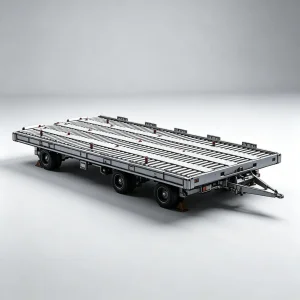
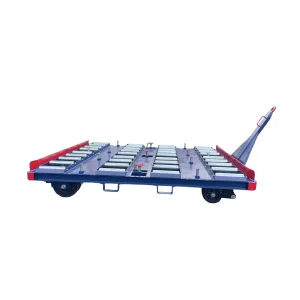
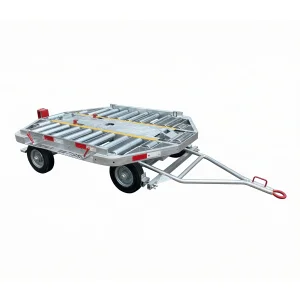
 Chidge Dolly