What Are the 2026 Top 18t Pallet Dolly Types?

Time:2026-10-12 Author:Oliver
0%

Moving a loaded pallet safely is becoming a measurable productivity issue, not merely a transport task. DHL’s 2024 Logistics Trend Radar identifies automation, robotics, and resilient warehouse operations as major industry directions. MHI’s Annual Industry Report also shows continuing investment in supply chain technology and material-handling systems. These findings matter when evaluating an 18t Pallet Dolly, because capacity alone does not determine operational value.

The best design depends on the working surface, turning space, pallet dimensions, towing method, and braking requirements. Heavy-duty platform dollies provide straightforward support for standardized loads. Steerable models improve movement around tight warehouse corners. Low-profile airport dollies can suit unit-load devices, while modular or multi-axle versions may distribute extreme weight more evenly. Some designs use fixed drawbars. Others rely on articulated steering for better tracking.

This guide compares the leading 18t Pallet Dolly types expected to attract attention in 2026. It considers rated capacity, frame construction, wheel configuration, maneuverability, maintenance access, and operator visibility. The analysis also refers to guidance from IATA cargo-handling practices, ISO pallet dimensions, and manufacturer load-testing documentation where applicable. Those references support a safer comparison, although they do not create one universal ranking.

Real sites are less tidy.

A dolly that performs well on smooth concrete may struggle across dock plates, uneven yards, or wet loading areas. Published capacity can also assume ideal loading and speed conditions. That detail is easy to overlook. Buyers should verify axle ratings, tire specifications, turning limits, and inspection records before selection. No single type wins everywhere, and this review acknowledges that practical limitation rather than forcing a perfect conclusion.
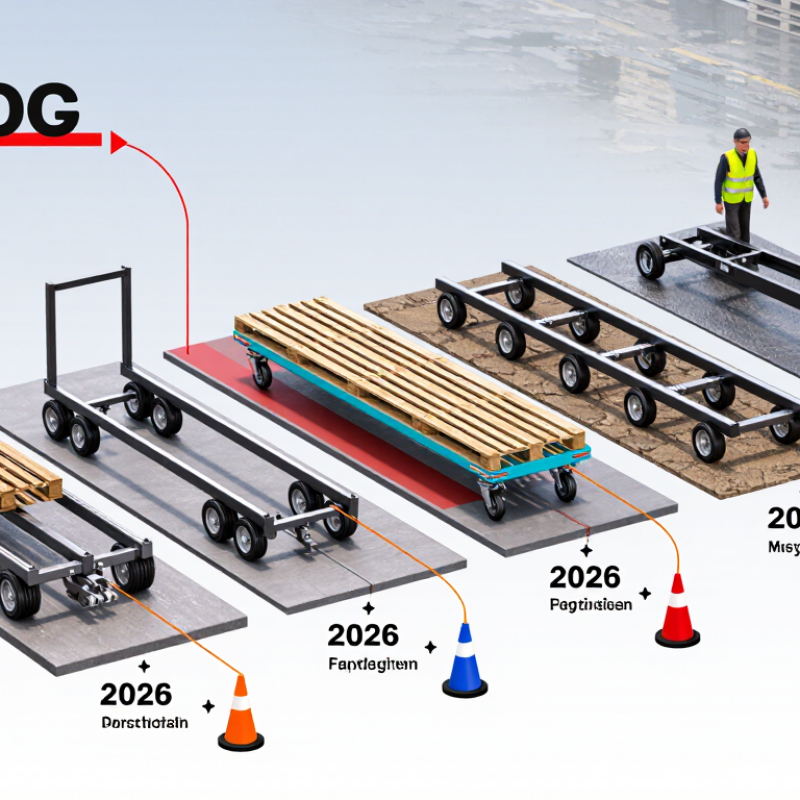
What Are the 2026 Top 18t Pallet Dolly Types?

What an 18-Ton Pallet Dolly Is and How It Works

An 18-ton pallet dolly is a low-profile transport platform designed to move palletized loads weighing up to 18 tons. Its working capacity may use metric or short tons, so the rating requires careful confirmation. The dolly supports the pallet through a reinforced deck, while heavy-duty wheels transfer the load across the floor. It is not simply a larger hand truck.

Most 18-ton pallet dollies use swivel casters, fixed wheels, or steerable axle assemblies. Manual models depend on a tow vehicle or a connected tug. Powered versions use electric drive systems for controlled movement in warehouses and production areas. Modular dollies can join together when oversized loads need wider support. Low-profile designs help operators position loads beneath machinery. Small details matter.

During operation, the load should sit near the deck center. Uneven weight can overload individual wheels and reduce steering control. Operators should check the floor condition, turning space, wheel condition, and braking method before movement. A rated capacity does not guarantee safe travel on every surface. The label alone is not enough.

In practice, acceleration should remain gradual, especially near ramps or narrow aisles. The drawbar, coupling point, and steering linkage also need regular inspection. A common mistake is treating the dolly as maintenance-free after purchase. That assumption is weak. For 2026 applications, the best type depends on load geometry, travel distance, floor quality, and the required control level.

How 18-Ton Pallet Dollies Are Classified by Design

What Are the 2026 Top 18t Pallet Dolly Types?

How 18-Ton Pallet Dollies Are Classified by Design

An 18-ton pallet dolly is classified mainly by its steering structure, deck layout, and connection method. Capacity alone does not define the correct design. Load distribution, floor condition, turning space, and towing speed also affect performance. In daily material handling, these details often decide whether movement feels controlled or unstable.

Rigid-frame dollies use a fixed chassis and usually suit straight transport routes. They are simple to inspect and can handle repeated loading cycles. Turntable-steering dollies pivot around a central joint, allowing tighter turns in confined yards. They need careful alignment because excessive side loading can stress the frame. Steerable-axle designs offer better tracking over longer paths. They are useful when the load must follow the towing vehicle accurately. Modular dollies use linked sections, making them adaptable for oversized or uneven loads. Their flexibility requires more connection checks.

Deck height creates another design category. Low-profile models reduce lifting distance and improve clearance under pallets. Raised-deck designs can provide better access for forklifts, but they may increase the loading height. Some dollies include removable restraints, reinforced decks, or adjustable supports. These features should match the pallet shape rather than appear impressive on a specification sheet.

A practical inspection should check wheels, kingpins, welds, brakes, and rated connections. The stated 18-ton rating may depend on equal loading and suitable ground conditions. That distinction is easy to miss. Classification helps narrow the choice, but real site measurements should challenge the first assumption.

What Are the 2026 Top 18t Pallet Dolly Types?

This chart classifies 18-ton pallet dollies by wheel arrangement and steering design. The load-per-wheel figures are calculated by dividing the nominal 18-ton capacity evenly across the listed wheels; actual working loads vary with cargo distribution, floor conditions, suspension, and safety factors.

The Main 18-Ton Pallet Dolly Types in 2026

The main 18-ton pallet dolly types in 2026 serve different warehouse and industrial transport needs. Fixed-deck dollies offer a simple, durable platform for straight-line movement. Their lower maintenance demand suits regular loading areas with wide travel lanes. Steerable dollies use a front axle or turntable system for tighter corners. They help operators move heavy pallets around columns, doors, and staging zones.

Hydraulic lift dollies raise the platform slightly, improving pallet alignment during loading. Low-profile models fit beneath pallets with limited clearance. Multi-axle dollies spread weight across more wheels, reducing floor pressure on suitable surfaces. Some versions include mechanical brakes, towing eyes, or removable side supports. Capacity ratings still depend on load position, wheel condition, and floor quality. An uneven 18-ton load can behave differently from a balanced one. That detail is often underestimated.

Tips: Check the pallet’s center of gravity before choosing a dolly. Measure aisle width and turning radius on site. Use wheels suited to concrete, steel, or sensitive flooring. Inspect welds, axles, tires, and locking parts before each shift. A rated capacity is not a promise for every condition. Confirm the actual load distribution. In practice, operators sometimes select a stronger-looking model but overlook maneuverability. That can slow work and increase handling risk. A careful trial with the real pallet usually reveals more than a brochure.

Key Features and Performance Differences to Compare

What Are the 2026 Top 18t Pallet Dolly Types?

An 18-ton pallet dolly must match the load, floor, and handling route. Fixed-frame dollies offer simple construction and stable load support. They suit straight-line movement across smooth concrete floors. Steerable dollies reduce turning effort around columns and narrow aisles. Their swivel assemblies need regular inspection, especially under uneven loads. Hydraulic lift dollies add height adjustment for transfers and loading operations. However, hydraulic systems can increase maintenance needs and total weight.

Key features reveal major performance differences. Check the rated capacity, deck dimensions, wheel material, turning radius, and ground clearance. Load distribution matters more than many buyers expect. A concentrated steel coil can stress the deck, even when its weight remains below 18 tons. Larger wheels usually roll better over joints and small debris. Softer wheels protect floors but may increase resistance under heavy loads. Braking performance also deserves practical testing, not just catalogue review.

In warehouse evaluations, steering response and starting effort often separate good dollies from average ones. A low deck can simplify loading, but it may reduce clearance near ramps. Mechanical parts should remain accessible for inspection. That saves time during demanding shifts. I would not select a dolly from capacity alone. Floor flatness, towing speed, operator visibility, and emergency stopping space can change real performance. Some specifications still feel incomplete without a loaded trial. A short site test may expose vibration, wheel slip, or awkward coupling that drawings never show.

How to Choose the Right 18-Ton Pallet Dolly for Each Task

Choosing the right 18-ton pallet dolly starts with the load, not the advertised capacity. A fixed-deck dolly suits straight warehouse transfers on smooth floors. A steerable dolly works better around columns, loading bays, and tight corners. For frequent movement, a powered model can reduce operator fatigue, but it needs clear routes and controlled acceleration.

Check the pallet dimensions, center of gravity, and wheel loading before selecting equipment. An 18-ton rating does not make every configuration safe. Uneven loads can overload individual wheels, especially when the floor has gaps or slopes. Field inspections should include the tow connection, braking system, steering joints, deck surface, and tire condition. Measure the turning radius with the actual load. Catalog figures can be optimistic.

Tips: Choose load capacity with a margin, not at the exact limit. Confirm the floor can support concentrated wheel loads. Use low-speed movement near doors and corners. Keep the load centered and secured. A common mistake is choosing a longer dolly for stability, then discovering it cannot turn inside the work area. I have seen this decision create extra handling steps and unnecessary risk. Sometimes, the smaller steerable design is the more practical choice. Check it twice.

What Are the 2026 Top 18 t Pallet Dolly Types? How to Choose the Right 18-Ton Pallet Dolly for Each Task

The specifications below represent typical engineering ranges for 18-ton pallet dollies available for industrial, logistics, infrastructure, and heavy-load handling applications. Actual capacity, dimensions, braking performance, and operating limits must be confirmed against the manufacturer’s technical documentation and the site’s floor, slope, towing, and safety requirements.

18-Ton Pallet Dolly Type Typical Rated Capacity Typical Deck Size
(L × W)
Typical Deck Height Wheel and Axle Arrangement Steering Method Recommended Operating Surface Typical Turning Requirement Brake or Restraint Options Best-Fit Tasks Important Selection Considerations
Fixed-Deck Industrial Pallet Dolly 18 t
≈ 39,683 lb
2,400–3,600 × 1,200–1,800 mm 450–650 mm Two or three heavy-duty axles; 8–12 solid or pneumatic wheels Rigid drawbar or front-axle steering Level concrete, asphalt, and prepared hardstand areas Typically 5–8 m outside turning radius Parking brake, wheel chocks, or towing-unit braking General warehouse transfer, plant maintenance, fabricated assemblies, and palletized machinery Choose a reinforced deck when loads are concentrated or have narrow support points. Confirm axle-load distribution before use.
Steerable Drawbar Pallet Dolly 18 t
≈ 39,683 lb
2,400–3,600 × 1,200–1,800 mm 450–700 mm Four-wheel, six-wheel, or eight-wheel configuration with a steerable front axle Mechanical drawbar steering with a tow eye or pintle connection Indoor and outdoor paved routes with moderate turning space Typically 4.5–7 m outside turning radius Mechanical parking brake, tow-vehicle brake, and optional overrun brake Repeated point-to-point towing between production areas, loading zones, and storage yards Verify drawbar articulation, tow height, coupling rating, and maximum towing speed.
Self-Steering Multi-Axle Pallet Dolly 18 t
≈ 39,683 lb
2,500–4,000 × 1,500–2,000 mm 500–750 mm Multiple independently tracking axles; commonly 8–16 load wheels Self-steering axle geometry or mechanically linked steering Large paved yards, plant roads, and smooth concrete floors Typically 4–6 m outside turning radius Parking brake, hydraulic service brake, or towing-unit braking Long loads, heavy equipment, steel structures, and frequent directional changes Best where maneuverability is important. Check tire scrub, steering synchronization, and minimum turning clearance.
Hydraulic-Steering Heavy-Duty Dolly 18 t
≈ 39,683 lb
2,400–4,500 × 1,500–2,200 mm 350–650 mm Four or more axles with load-sharing suspension or hydraulic cylinders Hydraulic steering controlled by a tow unit, power pack, or remote operator station Level, smooth industrial floors and engineered paved routes Typically 3.5–6 m outside turning radius Hydraulic service brakes, spring-applied parking brake, and emergency stop system Precision positioning of transformers, dies, molds, generators, and process equipment Requires hydraulic maintenance, compatible power supply, operator training, and protection against hose damage.
Low-Profile Pallet Dolly 18 t
≈ 39,683 lb
2,000–3,600 × 1,200–2,000 mm 250–400 mm Recessed solid wheels or compact bogies; usually 8–16 wheels Steerable drawbar, swivel bogies, or hydraulic steering Flat concrete or asphalt with minimal surface damage Typically 4–7 m outside turning radius Parking brake, wheel chocks, and optional hydraulic braking Low-clearance machinery, skids, tanks, cabinets, and equipment under door or rack restrictions Measure floor transitions, ramps, dock plates, and underside clearance. Low decks may reduce clearance over debris and uneven surfaces.
Rail-Guided Pallet Dolly 18 t
≈ 39,683 lb
2,400–4,000 × 1,200–2,000 mm 350–650 mm Flanged wheels or guide rollers matched to embedded or surface-mounted rails Rail guidance; powered or unpowered movement along a fixed route Dedicated rail tracks installed on a level industrial floor Track-defined; generally no free-turning capability Rail parking brake, mechanical stop, wheel blocks, and route interlocks Repetitive transfers between fixed workstations, assembly lines, and curing or testing areas Requires accurate rail alignment, load-bearing foundations, end stops, guarding, and clear route control.
Transfer-Table Pallet Dolly 18 t
≈ 39,683 lb
2,400–4,500 × 1,500–2,500 mm 400–800 mm Heavy-duty wheel groups or rail wheels designed for lateral transfer Guided travel with mechanical, hydraulic, or powered cross-transfer movement Engineered level floor with dedicated transfer lanes Track-defined or dependent on transfer-table geometry Mechanical locks, rail stops, service brakes, and interlocked controls Moving dies, molds, coils, castings, and assemblies between parallel production lines Confirm transfer-table capacity, stopping distance, floor loading, wheel-to-rail compatibility, and access for maintenance.
Heavy-Load Modular Dolly 18 t
≈ 39,683 lb
Configurable; commonly 2,000–6,000 × 1,200–3,000 mm 300–700 mm Interconnected axle lines, modular bogies, or load-sharing wheel sets Mechanical or hydraulic steering; some configurations allow coordinated steering Engineered hardstand, reinforced concrete, asphalt, or temporary haul roads Typically 4–10 m, depending on module arrangement Hydraulic service brake, parking brake, wheel chocks, and independent restraints Oversized machinery, construction modules, bridge components, and irregular loads Check load-center position, point-load limits, module compatibility, route width, grade, and communication procedures.
Powered Electric Pallet Dolly 18 t
≈ 39,683 lb
2,400–4,000 × 1,400–2,200 mm 400–700 mm Powered drive wheels with multiple load-bearing wheels or bogies Electric steering, tiller control, remote control, or operator platform Smooth, level indoor floors and controlled outdoor routes Typically 3–6 m outside turning radius Regenerative braking, electromagnetic parking brake, emergency stop, and speed limiting Indoor heavy-load movement where a conventional towing vehicle is impractical or emissions are restricted Evaluate battery runtime, charging facilities, floor gradients, turning clearance, safety sensors, and emergency access.
Rough-Terrain Heavy-Duty Dolly 18 t
≈ 39,683 lb
2,500–4,500 × 1,500–2,500 mm 600–900 mm Large pneumatic tires, articulated axles, or load-sharing suspension Steerable front axle, articulated steering, or hydraulic steering Compacted gravel, construction yards, asphalt, and engineered temporary roads Typically 7–12 m outside turning radius Hydraulic or pneumatic brakes, parking brake, and wheel chocks Outdoor construction, infrastructure projects, remote sites, and uneven yard conditions Confirm ground-bearing pressure, tire rating, grade capability, weather exposure, and route clearance.

FAQS

What is an 18-ton pallet dolly?

It is a low-profile platform for moving palletized loads up to 18 tons.

Does “18 tons” always mean the same capacity?

No. The rating may use metric tons or short tons.

How does an 18-ton pallet dolly move?

Manual models connect to a tow vehicle or tug.

Which steering design suits narrow areas?

Turntable-steering dollies can make tighter turns around columns and doors.

Why does load positioning matter?

Keep the load near the deck center whenever possible.

What floor conditions should operators check?

Inspect the surface, ramps, turning space, and aisle width before movement.

What features help with pallet loading?

Low-profile decks fit beneath pallets with limited clearance.

What inspections are needed before use?

Check wheels, axles, welds, kingpins, brakes, couplings, and steering linkages.

How should a suitable dolly be selected?

Consider load geometry, center of gravity, travel distance, floor quality, and turning radius.

Conclusion

An 18t Pallet Dolly is a heavy-duty load-moving platform designed to transport palletized materials safely across warehouses, factories, yards, and other industrial work areas. Its basic operation combines a strong load deck, swivel or fixed wheels, steering components, and braking or locking features to support up to 18 tons when used under suitable conditions. In 2026, these dollies can be classified by design, including manual, towable, steerable, low-profile, modular, and powered configurations. Each type offers different advantages in maneuverability, load control, turning radius, ground clearance, and operating efficiency.

When comparing the main 18t Pallet Dolly types, users should examine rated capacity, deck dimensions, wheel construction, steering response, braking performance, durability, maintenance needs, and compatibility with the working surface. A manual model may suit short-distance movement, while a towable or powered design can improve productivity over longer routes. The right choice depends on load size, travel frequency, floor conditions, available equipment, and required safety controls. Selecting a properly rated dolly and following operational procedures helps ensure stable, efficient, and reliable material handling.


Oliver

Oliver

Oliver is a seasoned marketing professional with a wealth of expertise in driving brand awareness and engagement. With a deep understanding of our company's product offerings, he consistently delivers high-quality content that enriches our professional blog. His insights not only shed light on......