7 Best 7t Pallet Dolly Options for Global Buyers?

Time:2026-10-07 Author:Aria
0%

Global air cargo is expanding, but cargo growth alone does not guarantee better ground handling. IATA’s 2024 Air Cargo Market Analysis reported an 11.3% increase in global cargo tonne-kilometres compared with 2023. Boeing’s Commercial Market Outlook also projects air cargo traffic to nearly double by 2043. These figures suggest stronger demand for dependable airport ground-support equipment, including the 7t Pallet Dolly.

A 7t Pallet Dolly must carry heavy unit load devices across uneven aprons, warehouse floors, and aircraft loading zones. Buyers should examine rated capacity, deck height, wheel design, braking performance, tow compatibility, corrosion protection, and spare-part access. A six-wheel layout may improve stability, but it can also increase maintenance points. That detail is easy to overlook.

Willie Walsh, Director General of the International Air Transport Association, has stated, “Safety is aviation’s highest priority.” His point applies directly to pallet-dolly selection. A failed brake or damaged caster can delay a flight, damage cargo, or expose workers to unnecessary risk. Small equipment decisions can create large operational consequences.

This guide compares seven 7t Pallet Dolly options for global buyers. It considers practical loading conditions, not only catalogue specifications. However, publicly available reports usually measure cargo volumes, not pallet-dolly performance. That limitation matters. A model that looks efficient on paper may perform poorly in rain, heat, or congested ramp conditions. Buyers should request test records, maintenance data, and realistic site references before choosing. No option is perfect. The right choice depends on aircraft compatibility, traffic intensity, local service support, and the buyer’s tolerance for downtime.
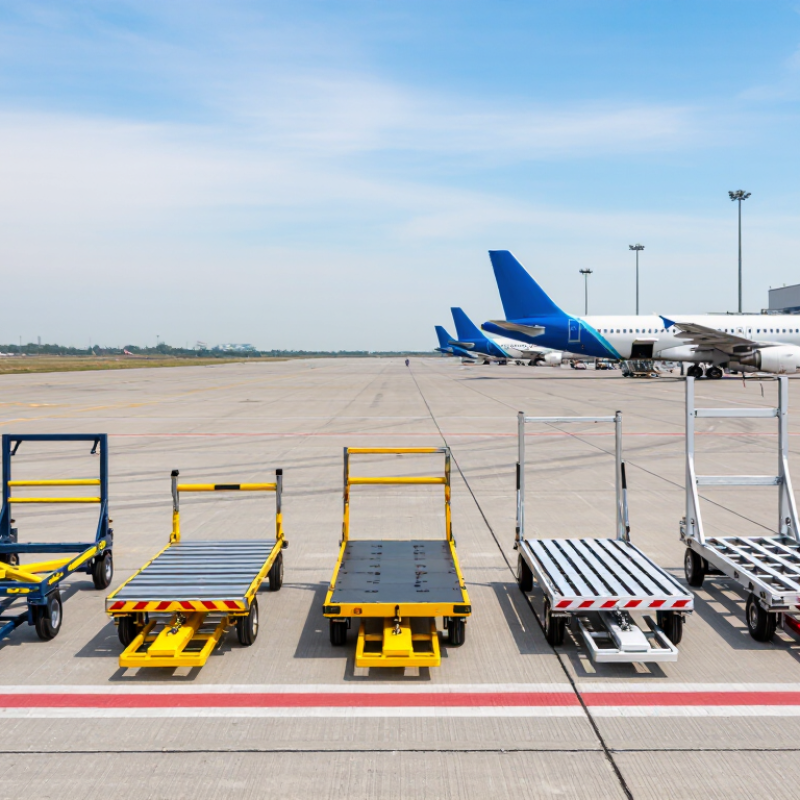
7 Best 7t Pallet Dolly Options for Global Buyers?

7 Best 7t Pallet Dolly Types Ranked by Capacity, Deck, and Mobility

For global buyers, a 7t pallet dolly should be ranked by more than rated capacity. A fixed-deck steel dolly ranks first for flat loads and warehouse floors. Its low center of gravity improves stability. ISO 6780 identifies six primary pallet dimensions, so deck size must match the pallet footprint, not only the load weight. A swivel-caster dolly ranks third for tight aisles. It turns easily, but soft casters may resist on rough concrete. A towable yard dolly follows, offering better movement across outdoor surfaces.

Powered electric models rank fifth for repeated routes and mild gradients. They reduce pushing effort, although batteries add maintenance and downtime. Rail-guided dollies rank sixth because they provide excellent directional control, but they need fixed infrastructure. Modular heavy-duty dollies rank seventh for unusual deck lengths and concentrated loads. Their flexibility is valuable, yet setup errors can reduce stability. The ranking is not absolute. A perfect deck can still fail with poor load distribution.

Tips: Check dynamic capacity, caster diameter, brake performance, and turning radius. ISO 8611 load-testing principles can help buyers compare pallet support and deck behavior. The World Bank’s 2023 Logistics Performance Index assessed 139 economies, highlighting reliability and delivery timeliness. That matters in ports and distribution centers. Inspect welds, wheel bearings, and deck deflection before purchase. Seven tonnes on paper may feel very different on a ramp. Rustic, but true.

Core Specifications: 7,000 kg SWL, Load Center, Wheels, and Turning Radius

7 Best 7t Pallet Dolly Options for Global Buyers?

A 7t pallet dolly should be compared by working limits, not appearance. Its safe working load must reach 7,000 kg under stated conditions. Check whether the rating applies to evenly distributed cargo. A concentrated steel coil can overload the frame quickly. The load center matters too. A 1,200 mm load center creates higher fork and axle forces than a 600 mm center. ISO 12100 recommends risk-based machinery assessment, including foreseeable misuse and stability concerns.

The seven practical options include fixed-wheel, swivel-wheel, steerable, towable, low-profile, heavy-duty, and modular designs. Wheel diameter affects floor pressure, vibration, and obstacle clearance. Polyurethane wheels suit smooth concrete, while steel or rubber options may perform better outdoors. Turning radius needs measurement with the full load attached. A compact 7t dolly may turn within 3,000 mm, but steering geometry and load overhang can increase the real radius. Published figures are not always comparable. That is a common buying mistake.

Tips: Ask for tested SWL evidence, wheel-load calculations, load-center diagrams, and turning-radius measurements. The World Bank Logistics Performance Index 2023 highlights timeliness and shipment reliability as key logistics factors. A dolly that moves slowly or needs repeated repositioning can reduce those gains. Leave margin above 7,000 kg. In practice, floor joints, ramps, and uneven loading often expose weaknesses first. Perhaps this is where specifications need more honest testing.

Standards Check: ISO 6780 Pallet Sizes and EN 1757-1 Safety Requirements

For global buyers comparing 7t pallet dollies, ISO 6780 should guide the platform dimensions. The standard defines principal pallet sizes and tolerances for international handling. Common footprints include 1200 × 800 mm and 1200 × 1000 mm. Other supply chains use 1140 × 1140 mm or 1219 × 1016 mm pallets. Measure real pallets before ordering. Catalog dimensions can hide small differences.

A dolly should support the pallet without excessive overhang. Small mismatch, big trouble. Check deck width, fork spacing, wheel position, and turning clearance under the rated load. A seven-ton capacity may apply only to evenly distributed weight. Concentrated loads can bend decks or overload individual casters. Floor condition matters too. Rough concrete changes rolling resistance and braking performance.

EN 1757-1 is relevant when the equipment falls within its scope for pedestrian-propelled industrial trucks. Buyers should examine stability, braking, handles, guarding, and safe operating controls. The standard does not replace a site-specific risk assessment. Ask for test evidence, load charts, maintenance instructions, and clear marking of maximum capacity. I would also verify performance with the heaviest pallet shape, not only a balanced test load. That practical step is often missed. A seven-ton dolly may meet a headline rating, yet still feel unsafe during a tight turn or sudden stop.

Global Buying Matrix: Corrosion Protection, Parts Support, Warranty, and Incoterms

For global buyers, the best 7t pallet dolly is not always the cheapest steel model. A practical buying matrix should compare corrosion protection, parts support, warranty terms, and Incoterms. NACE’s IMPACT study estimated global corrosion costs at about US$2.5 trillion annually, or 3.4% of global GDP. That figure makes surface treatment a purchasing issue, not decoration.

Seven workable options include painted carbon steel, hot-dip galvanized steel, stainless-steel contact parts, sealed-bearing designs, modular tow-bar units, reinforced castor systems, and hybrid corrosion-resistant frames. Galvanizing suits humid ports and outdoor yards, while sealed bearings reduce maintenance in dusty warehouses. I would still request coating thickness, salt-spray results, wheel-load ratings, and dynamic testing. Marketing language can be vague. A 7t static rating may not equal a safe 7t moving load.

Parts support often decides long-term cost. Ask for regional stock, exploded drawings, bearing dimensions, and realistic delivery times. Warranty coverage should identify frames, wheels, welds, and wear parts separately. ICC Incoterms 2020 also changes the risk calculation: FCA can offer clearer export control, while DAP or DDP may simplify delivery but increase landed cost. The World Bank’s 2023 Logistics Performance Index shows major differences in customs, infrastructure, and shipment reliability across markets. Therefore, buyers should price duties, inland transport, insurance, and replacement parts before comparing quotations. A lower offer may become expensive after one damaged wheel.

7 Best 7t Pallet Dolly Options for Global Buyers

Global buying matrix scored from 1 to 5 across corrosion protection, replacement-parts support, warranty coverage, and Incoterms flexibility. Higher scores indicate stronger purchasing suitability for international buyers.

Benchmark basis: common specifications and commercial practices for heavy-duty 7t pallet dollies, including coated or galvanized steel protection, documented spare-parts availability, standard warranty periods, and export terms such as EXW, FCA, FOB, CIF, and DDP. Verify final specifications and contractual terms with each supplier.

Total-Cost Test: Delivered Price, Maintenance, and Rated-Service-Life Evidence

Choosing among seven 7t pallet dolly options requires more than comparing factory prices. Evaluate fixed-deck, steerable, low-profile, modular, corrosion-resistant, powered-assist, and reinforced-frame designs. Delivered price should include freight, insurance, customs handling, unloading, and commissioning. The U.S. Bureau of Labor Statistics tracks industrial equipment producer prices monthly, showing why quotations should include validity dates. Freight surcharges can quietly change the winning option.

Maintenance creates the larger cost difference. Ask for wheel replacement intervals, bearing specifications, lubrication points, and spare-part lead times. A dolly needing weekly greasing may outperform a cheaper unit with inaccessible components. MHI’s 2024 Industry Report found that 83% of supply-chain professionals planned to increase technology investment. That signals stronger attention to lifecycle efficiency, not simply purchase price. Delivered cost bites.

Rated service life needs evidence, not optimistic brochures. Request load-test certificates, fatigue-test methods, cycle counts, and inspection records for the frame, tow bar, deck, and wheels. ISO 3691-5 provides safety requirements for pedestrian-powered industrial trucks, but it does not prove a specific dolly will last ten years. Use the standard carefully. Records matter.

A practical comparison should calculate cost per operating year and cost per 1,000 loaded movements. Include downtime, replacement wheels, technician hours, and expected resale value. I would discount any service-life claim lacking test conditions, load distribution, or maintenance assumptions. One weakness remains: real warehouse floors are harsher than laboratory surfaces. Request a site trial with a full seven-ton load, tight turns, ramps, and repeated starts.

7 Best 7t Pallet Dolly Options for Global Buyers? - Total-Cost Test: Delivered Price, Maintenance, and Rated-Service-Life Evidence
Option Typical Use Rated Capacity Deck / Platform Size Wheel Arrangement Unladen Weight Typical Turning Radius Indicative Delivered Price
(USD)
Estimated Annual Maintenance
(USD)
Service-Life Planning Range 5-Year Total Cost of Ownership
(USD)
Service-Life Evidence to Request
1. Standard Fixed-Deck Steel Dolly Factory yards, warehouses, and short-distance pallet transfer on smooth concrete 7,000 kg 1,200 × 1,000 mm 2 fixed load wheels + 2 swivel casters Approximately 420 kg Approximately 2.4 m $4,900–$6,400 $220–$380 8–12 years under one shift/day and level-floor use $6,200–$8,300 Wheel-load rating, frame weld inspection records, caster-cycle test, and corrosion-protection specification
2. Heavy-Duty Low-Profile Dolly Low-clearance loading, heavy pallets, molds, dies, and machinery skids 7,000 kg 1,300 × 1,100 mm 4 heavy-duty swivel casters with mechanical steering linkage Approximately 560 kg Approximately 2.1 m $6,300–$8,200 $320–$520 10–15 years under controlled indoor operation $8,200–$10,800 Static-load test at 125% of rated capacity, steering-linkage fatigue test, and wheel-bearing replacement schedule
3. Steerable Platform Dolly Long or irregular loads requiring improved directional control 7,000 kg 1,500 × 1,200 mm 4-wheel steerable platform with drawbar Approximately 680 kg Approximately 2.8 m $7,800–$10,500 $450–$720 10–14 years with scheduled steering and axle servicing $10,100–$14,100 Drawbar pull test, steering-angle verification, axle-load distribution, and documented fatigue-cycle results
4. Tandem-Axle Industrial Dolly Uneven floors, outdoor yards, and frequent movement over expansion joints 7,000 kg 1,400 × 1,100 mm 2 tandem solid axles with pneumatic or solid-rubber tires Approximately 760 kg Approximately 3.4 m $8,600–$11,800 $520–$860 8–12 years in mixed indoor and outdoor service $11,200–$15,900 Axle and tire-load calculations, braking or chocking provisions, outdoor corrosion test, and road-surface durability data
5. Corrosion-Resistant Stainless or Coated Dolly Food, chemical, coastal, washdown, and humid environments 7,000 kg 1,200 × 1,000 mm 2 fixed wheels + 2 sealed swivel casters Approximately 470 kg Approximately 2.5 m $9,500–$13,500 $300–$560 10–15 years with routine washdown and fastener inspection $11,000–$16,300 Material grade or coating thickness, salt-spray test result, sealed-bearing specification, and weld-passivation procedure
6. Powered-Tow-Compatible Dolly High-throughput internal logistics using an electric tug or tow tractor 7,000 kg 1,400 × 1,100 mm Steerable axle, tow bar, and towing eye Approximately 620 kg Approximately 3.0 m $10,800–$15,000 $620–$980 8–12 years, depending on towing frequency and floor condition $14,000–$19,900 Towing-eye proof load, coupling compatibility, maximum tow speed, emergency-stop interface, and repeated-load test data
7. Hydraulic Lift-Deck Dolly Applications needing limited pallet height adjustment or easier load transfer 7,000 kg 1,300 × 1,100 mm 4 industrial casters with hydraulic lift deck Approximately 900 kg Approximately 2.7 m $13,500–$19,500 $800–$1,350 7–10 years with hydraulic-fluid and seal maintenance $17,500–$25,400 Hydraulic pressure test, overload-valve setting, lift-cycle test, hose-burst protection, and platform-deflection measurement
Cost basis: The figures are planning benchmarks in USD for one 7,000 kg-rated unit, including typical international freight, export packing, and basic import handling, but excluding local taxes, duties, installation, and site modifications. Five-year TCO is calculated as delivered price plus five years of estimated routine maintenance and normal wear parts; it excludes accidental damage, labor downtime, and financing costs.

Technical basis: Capacity should be verified against the complete load path, including deck, frame, axles, wheels, casters, drawbar, and floor loading. A claimed service life is not a universal rating; buyers should request test records, inspection intervals, spare-parts availability, and operating limits for the intended floor, speed, duty cycle, temperature, and environment. For procurement, confirm conformity with applicable local machinery, occupational-safety, lifting, towing, and transport regulations.

FAQS

What capacity should a 7t pallet dolly safely support?

It should support 7,000 kilograms under clearly stated conditions. The rating usually assumes evenly distributed cargo. Leave extra margin. Ramps, floor joints, and uneven loading can expose weaknesses.

Why does the load center matter?

A longer load center increases forces on the frame, forks, and axles. A 1,200-millimeter center creates more stress than a 600-millimeter center. A concentrated steel coil can overload one area quickly. The headline capacity may not tell the whole story.

How should buyers choose the deck size?

Match the deck to the pallet’s real footprint. Common sizes include 1,200 × 800 and 1,200 × 1,000 millimeters. Other pallets may measure 1,140 × 1,140 or 1,219 × 1,016 millimeters. Measure actual pallets before ordering. Small mismatch, big trouble.

Which dolly type suits flat loads and smooth warehouse floors?

A fixed-deck steel dolly offers strong stability on level floors. Its low center of gravity helps control movement. It suits flat loads with balanced weight. It is less convenient in tight aisles.

Which design works best in narrow turning areas?

A swivel-wheel dolly can turn more easily in compact spaces. Its advantage decreases on rough concrete. Soft wheels may resist movement and increase pushing effort. Measure the turning radius with the full load attached.

Are towable dollies useful outdoors?

Towable dollies generally move better across outdoor surfaces. They can handle yard routes more effectively than simple warehouse designs. Check wheel material, obstacle clearance, and braking performance. Outdoor ground is rarely as forgiving as a smooth floor.

When are powered electric dollies worth considering?

Powered models can reduce pushing effort on repeated routes and mild gradients. They may suit busy distribution areas. Batteries add charging, maintenance, and downtime concerns. A failed battery can stop a route.

What should buyers inspect before purchase?

Request tested safe-working-load evidence and load-center diagrams. Check welds, wheel bearings, brakes, deck deflection, and caster loads. Measure the actual turning radius under full load. Inspect the heaviest pallet shape, not only a balanced test load. That detail is often missed.

Conclusion

Choosing the right 7t Pallet Dolly requires more than comparing rated capacity. This guide ranks seven practical types by their 7,000 kg safe working load, load-center performance, deck design, wheel configuration, and turning radius. It explains how deck dimensions and pallet compatibility affect stability, maneuverability, and loading efficiency in demanding warehouse, yard, and industrial environments. Buyers will also find a focused review of ISO 6780 pallet-size considerations and EN 1757-1 safety expectations, helping them evaluate essential design and operating features.

The global buying matrix compares corrosion-protection options, spare-parts availability, warranty coverage, technical support, and Incoterms. A total-cost test then considers delivered purchase price, routine maintenance, downtime risk, and credible evidence of rated service life. By reviewing both operating performance and long-term ownership costs, international buyers can select a 7t Pallet Dolly that offers dependable handling, suitable mobility, compliant safety features, and better value throughout its working lifespan.


Aria

Aria

Aria is a dedicated marketing professional with a deep passion for innovative strategies and a keen understanding of our company's product offerings. With a wealth of experience in the industry, Aria excels at crafting engaging content that highlights the unique features and benefits of our......