In 2026, aviation buyers will evaluate more than a dolly’s purchase price. They will examine load stability, towing behavior, corrosion resistance, and turnaround speed. The Container Dolly For Aviation market is gaining importance as airports handle heavier traffic and tighter ramp schedules.
IATA reported that global passenger demand reached a record level in 2024. Its 2025 industry outlook also expected continued traffic growth, increasing pressure on ground-support equipment. Airbus’ Global Market Forecast 2025–2044 projects demand for more than 43,000 new commercial aircraft. More aircraft mean more containers, baggage units, and ramp movements.
Small equipment matters.
Aviation ground-handling specialist John Menzies once emphasized, “Safe and efficient ground operations protect the entire flight schedule.” That principle should guide every 2026 dolly decision. A strong Container Dolly For Aviation must fit existing ULD dimensions, support smooth cornering, and survive repeated loading cycles. Buyers should inspect wheel bearings, tow bars, locking mechanisms, deck height, and brake performance.
The best choice is not always the strongest model. Excess weight can increase towing effort and fuel use. A cheaper dolly may also create hidden maintenance costs. This is where many purchasing plans become incomplete.
Buyers should request test units, service records, and clear load ratings. They should measure ramp surfaces, turning radii, and storage space before signing contracts. ISO and IATA-compatible handling requirements deserve close review, but local airport procedures still matter.
Performance data can mislead.
Real ramp trials reveal more than brochures. In 2026, reliable buyers will compare safety, lifecycle cost, operator feedback, and parts availability together. That approach is less dramatic, but probably more dependable.
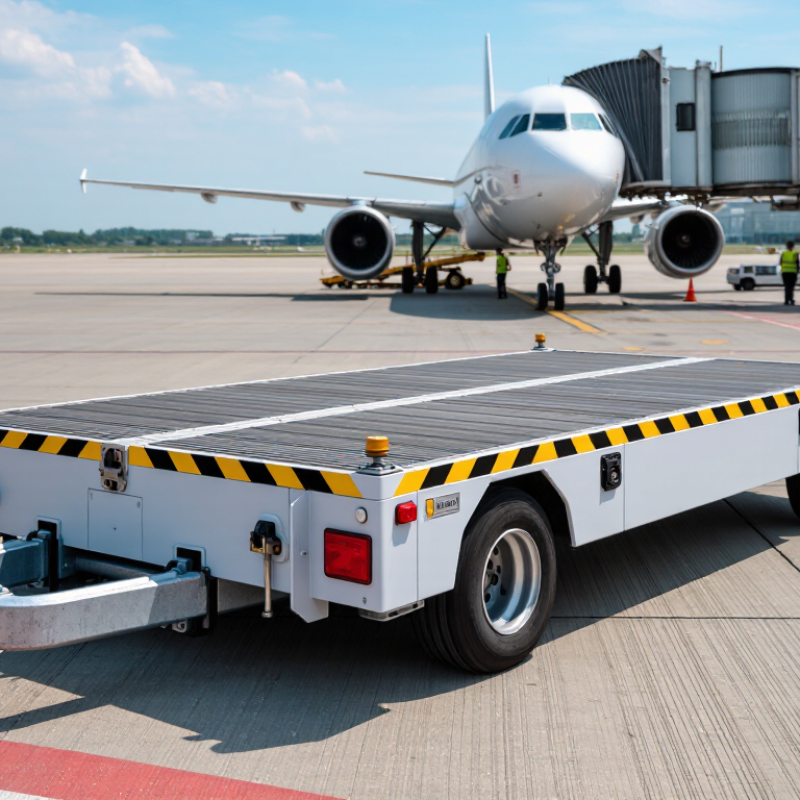
2026 Top Container Dolly for Aviation Buyers?
What Is an Aviation Container Dolly and What Does It Do?
An aviation container dolly is a low-profile platform for moving Unit Load Devices, or ULDs, across airport ramps. It uses rollers, guide rails, locks, and brakes to position cargo containers beside aircraft loading systems. Ground crews can transfer heavy ULDs without lifting them manually. Small details matter. A weak brake can create a serious operational risk.
IATA’s Air Cargo Market Analysis reported an 11.3% increase in global air cargo demand during 2024. Capacity grew by 7.4% during the same period. ACI World’s 2024 traffic forecast also estimated 9.5 billion air travelers worldwide. These figures show why airports need reliable, fast, and compatible ground equipment. A suitable dolly should match ULD dimensions, ramp conditions, towing methods, and expected load weight. Its deck height must also align with aircraft loaders.
Safety performance deserves more attention than appearance. Buyers should review load ratings, wheel durability, corrosion protection, locking systems, and inspection access. IATA handling guidance emphasizes controlled ULD movement and secure restraint during ground operations. In practice, maintenance teams often discover problems first: seized rollers, uneven wheels, or damaged tow bars. The perfect dolly does not exist. Selection still requires compromise. A lighter model may improve maneuverability, but it can reduce durability under constant use. Field trials, documented inspections, and operator feedback remain essential before a 2026 purchase.
| Buyer Dimension | Typical Specification or Range | Why It Matters | Recommended Verification Before Purchase |
|---|---|---|---|
| Primary Function | Ground transport and positioning of Unit Load Devices (ULDs), including aircraft containers and pallets. | Allows ULDs to move between cargo terminals, staging areas, mobile cargo equipment, and aircraft loading positions. | Confirm compatibility with the planned ULD fleet and the complete airport ground-support-equipment workflow. |
| Common ULD Applications | Lower-deck containers such as LD3-type units; aircraft pallets such as PMC-type units; other approved cargo containers. | Different ULD footprints require suitable roller spacing, deck width, guides, and load restraint. | Match the dolly deck and guides to the exact ULD contour, base dimensions, and handling points. |
| Typical Dolly Deck Width | Approximately 1,600–2,600 mm, depending on whether the unit is designed for containers, pallets, or both. | The deck must support the ULD base without creating unsafe overhang or interference with guide rails. | Measure the ULD base, wheel-track layout, side clearances, and transfer-interface dimensions. |
| Typical Dolly Deck Length | Approximately 1,600–3,300 mm for common single-ULD configurations. | Determines whether the dolly can safely carry smaller containers, large pallets, or extended cargo units. | Check the longest intended load, center-of-gravity position, and available turning clearance. |
| Rated Payload | Common airport models: approximately 7,000–15,000 kg; specialized heavy-duty units may be rated higher. | Payload rating must cover the combined weight of the ULD and cargo, not cargo weight alone. | Compare the certified gross capacity with the heaviest planned ULD and apply the required safety margin. |
| Empty Dolly Weight | Approximately 1,000–3,500 kg, depending on frame size, steering, brakes, rollers, and suspension. | Lower tare weight can improve towing efficiency, while a heavier frame may provide greater stability and durability. | Check the towing vehicle capacity, ramp restrictions, axle loads, and storage-area floor rating. |
| Deck Handling System | Powered or unpowered rollers, ball mats, casters, guide rails, or combinations of these systems. | Rollers and ball mats reduce manual pushing effort and support accurate ULD transfer. | Verify roller diameter, spacing, load rating, corrosion resistance, drainage, and maintenance access. |
| Typical Deck Height | Approximately 280–560 mm above ground for low-profile airport cargo dollies. | Deck height affects transfer alignment with cargo loaders, scissor lifts, and terminal handling equipment. | Confirm the required interface height and allowable height tolerance for every connected system. |
| Steering Arrangement | Fixed axle, front-axle steering, rear-axle steering, or multi-axle articulated steering. | Steering design affects turning radius, tracking, maneuverability, and tire wear. | Review the minimum turning radius, drawbar geometry, steering lock, and reverse-maneuvering behavior. |
| Braking System | Mechanical parking brake, overrun brake, hydraulic brake, pneumatic brake, or electric brake, depending on configuration. | Brakes help prevent unintended movement during loading, unloading, parking, and ramp operations. | Confirm compatibility with the towing vehicle, airport safety rules, emergency-stop procedures, and slope limits. |
| Typical Towing Speed | Often limited to approximately 15–25 km/h in controlled ground-support areas; local operating rules may be lower. | Speed limits reduce the risk of cargo shift, tipping, drawbar failure, and collisions with aircraft or equipment. | Use the lower value required by the airport, airline, equipment certification, or site traffic plan. |
| Load Restraint | Side guides, end stops, locking pins, restraint bars, or dedicated ULD locks. | Restraints prevent the ULD from sliding or rolling during towing, braking, turning, and uneven-surface travel. | Confirm restraint positions, release controls, visual indicators, and compatibility with each ULD base type. |
| Drawbar and Coupling | Fixed or adjustable drawbar with a tow eye, pin coupling, or approved airport-tug connection. | The coupling transfers towing and braking forces and influences train stability. | Check tow-eye dimensions, vertical load, coupling height, articulation angle, and rated towing force. |
| Ground Clearance | Commonly approximately 100–180 mm, subject to frame and wheel configuration. | Adequate clearance helps the dolly cross expansion joints, ramps, drainage channels, and uneven apron surfaces. | Evaluate the lowest point, ramp transitions, tire deflection, and actual operating surfaces. |
| Tire Configuration | Solid, pneumatic, or resilient tires; tire quantity and size vary with payload and axle design. | Tires influence ride quality, surface loading, noise, maintenance, and performance on wet or uneven ground. | Review tire load rating, replacement availability, pressure requirements, and airport-surface compatibility. |
| Frame Material and Finish | Welded structural steel or aluminum construction with painted, galvanized, or corrosion-resistant finishes. | Material and coating selection affect service life in humid, coastal, de-icing, and chemical-exposure environments. | Specify corrosion protection, weld quality, drainage points, inspection access, and repair procedures. |
| Typical Operating Environment | Aircraft aprons, cargo terminals, maintenance areas, warehouses, and controlled airside roads. | Airport surfaces can expose equipment to rain, jet-fuel residues, de-icing chemicals, dust, and frequent impacts. | Define temperature range, surface conditions, wash-down practices, and restricted-area operating requirements. |
| Container Dolly vs. Cargo Trailer | A dolly is generally low-profile and optimized for ULD transfer; a cargo trailer is usually designed for enclosed or general freight transport. | Choosing the correct equipment prevents poor transfer alignment, excessive loading effort, and inadequate restraint. | Select a ULD dolly for airport-container handling and a freight trailer only when its deck and restraint system are suitable. |
| Maintenance Priorities | Rollers, bearings, wheels, brakes, steering joints, drawbar, locks, welds, and corrosion protection. | These components directly affect safe movement, alignment, stopping distance, and ULD retention. | Require inspection intervals, spare-parts lists, lubrication points, wear limits, and service documentation. |
| Best Selection Criteria for 2026 Buyers | Payload margin, ULD compatibility, transfer height, braking, steering, corrosion resistance, visibility, and lifecycle cost. | Purchase price alone does not determine suitability; operational compatibility and uptime have a major effect on total cost. | Conduct a site trial with the heaviest ULD, towing vehicle, transfer equipment, turning route, ramps, and actual operating procedures. |
Galvanized steel provides strong impact resistance for frequent transfers and uneven aprons. Aluminum reduces equipment weight. Small differences matter. Check welds, corrosion protection, drainage points, and frame rigidity before purchasing.
Compare static load, moving load, axle limits, and point-load performance. Do not rely on one capacity figure. Weight distribution matters. Use actual container weights and towing conditions for confirmation.
The deck should match the container or pallet dimensions precisely. Small gaps can allow movement during towing. Small gaps matter. Check roller spacing, platform height, and transfer-system compatibility during a practical test.
Test the dolly on uneven, wet, or sloped surfaces found at the airport. Record stopping distance, steering effort, noise, and roller drag. Test it wet. A dry-apron trial may hide important weaknesses.
Check braking performance, locking devices, tow coupling, ground clearance, and wheel protection. Confirm that containers remain stable during movement. Training still matters. Safety equipment cannot replace careful operating procedures.
Inspect rollers, bearings, tow bars, brakes, tires, welds, and corrosion protection on a documented schedule. Keep common wear parts available. Service records help. Planned inspections can reduce avoidable downtime during busy operations.
Request load-test records, inspection intervals, maintenance instructions, and compatibility details. Confirm whether ratings include ramps, braking, and uneven surfaces. Numbers need context. Clear documentation supports safer purchasing and easier servicing.
Compare measured performance with fleet data and run a supervised trial using typical containers and routes. Record alignment, repair time, and turning space. Specifications can mislead. I would leave room for field observations, because real ramp conditions may reveal problems later.
Choosing the right Container Dolly For Aviation in 2026 requires more than comparing price and appearance. An aviation container dolly is designed to move unit load devices, cargo containers, and other standardized equipment safely across airport ramps, warehouses, and loading areas. Buyers should compare dolly types, platform dimensions, steering systems, height, turning radius, and compatibility with the aircraft and handling equipment they use. The best option should support smooth transfers while reducing manual effort and cargo movement risks.
Key considerations include reliable brakes, anti-slip surfaces, secure restraints, corrosion-resistant materials, suitable load capacity, and durable wheels for demanding operational environments. Maintenance requirements should also be reviewed, including access to replacement parts, inspection points, lubrication needs, and expected service life. Before selecting a 2026 model, aviation buyers should confirm technical specifications, safety procedures, operating conditions, warranty coverage, training requirements, and compatibility with existing ground-support systems. A careful evaluation helps ensure efficient handling, long-term value, and safer daily operations.

 Chidge Dolly