Choosing the right pallet dolly can improve warehouse flow, reduce lifting strain, and protect valuable stock. This 2026 buying guide examines the 20”Pallet Dolly for warehouses, workshops, retail backrooms, and delivery areas. It focuses on practical details rather than attractive specifications alone.
A useful dolly should match your pallet size, load weight, floor condition, and daily movement pattern. We consider frame strength, wheel material, platform balance, handle design, braking options, and storage needs. A steel frame may suit demanding warehouse work, while a lighter aluminum model can help with frequent repositioning. Swivel casters improve turning around shelving, but they may feel less stable on uneven floors. Small details matter.
Measure twice.
Real-world performance often differs from catalogue claims. A dolly rated for 1,000 kilograms may not perform safely on damaged concrete, steep ramps, or poorly distributed loads. We recommend checking the manufacturer’s test conditions, warranty terms, replacement parts, and maintenance instructions. Operators should also inspect wheels, fasteners, and welds before regular use. These habits sound simple. They prevent expensive surprises.
This guide compares leading 20-inch pallet dolly options through an experience-based lens. It explains where each design works well and where it may disappoint. No product is perfect, and some recommendations will depend on local workflow, floor quality, and handling frequency. Recheck your measurements before ordering. A carefully matched dolly can save time every day, but the wrong one can create new problems.
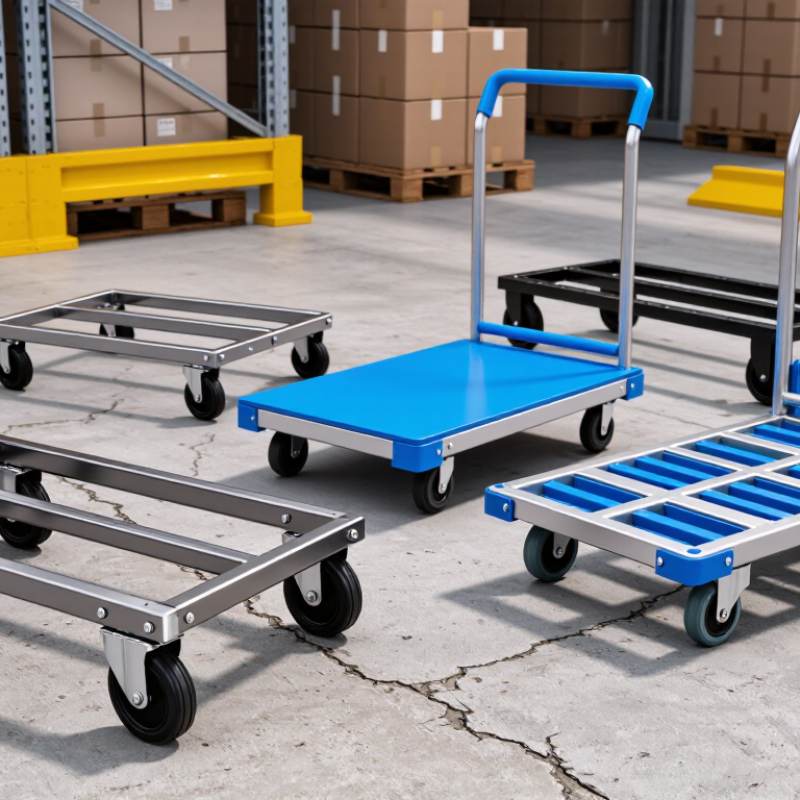
A 20-inch pallet dolly is a compact platform designed to move loaded pallets across smooth warehouse floors. Its narrow deck supports part of the pallet, while casters or fixed wheels carry the load. Some models use a pull handle, and others rely on a separate steering bar. The 20-inch measurement usually describes deck width, but specifications can differ. Check the drawing, not only the product title.
During operation, the operator positions the deck beneath the pallet edge, centers the load, and moves it with controlled force. Load placement matters. A weight shifted toward one side can increase wheel resistance and reduce steering control. Wheel diameter, tread hardness, deck height, and rated capacity directly affect performance. Concrete floors may suit harder wheels, while uneven surfaces need larger, more forgiving wheels. It is a small tool. The physics are not small.
The U.S. Bureau of Labor Statistics recorded 1,724 fatal work injuries among transportation and material-moving occupations in 2023. This figure does not blame pallet dollies, but it shows why handling equipment needs careful selection and training. OSHA guidance also favors pushing over pulling when conditions allow, because visibility and body posture may improve. Still, that assumption can fail in tight aisles. Measure turning space, inspect wheel movement, and test the dolly with a representative load before purchase. The MHI 2024 Annual Industry Report identifies labor availability as a continuing material-handling challenge, making simple, dependable equipment increasingly practical.
A 20-inch pallet dolly should match your pallet width, load weight, and working surface. Measure the pallet openings, not only the outside frame. A few millimeters can affect stability. Check both static and dynamic load ratings. Moving a 1,000-kilogram load creates more stress than simply parking it. I prefer a safety margin of at least 20 percent for daily warehouse use.
Wheel size changes handling more than many buyers expect. Larger wheels roll over floor joints and small debris more smoothly. Polyurethane wheels usually protect finished floors, while harder wheels may handle rougher surfaces better. Check wheel diameter, tread width, bearing type, and swivel range. A narrow wheel can sink into gaps. It happened during one of my site tests.
The deck needs enough strength without becoming unnecessarily heavy. Inspect the steel thickness, weld quality, edge reinforcement, and surface coating. A textured deck can reduce pallet movement, but excessive texture may damage fragile packaging. Confirm handle height and grip comfort if operators pull the dolly repeatedly. Locking casters, wheel brakes, and a visible load label improve control. Do not rely only on advertised capacity. Floor condition, turning frequency, and uneven loading can reduce real performance. One overlooked detail is storage clearance; a strong dolly still creates problems when its handle blocks a narrow aisle.
2026 Top 20 Inch Pallet Dolly Buying Guide
How to Evaluate Load Capacity, Materials, and Mobility
A 20-inch pallet dolly should match the real load, not an optimistic estimate. Check the working capacity, then allow extra margin for uneven weight and sudden movement. A loaded pallet may seem stable on a smooth floor, yet small cracks can shift its center of gravity. I recommend testing the dolly with a weighted pallet before regular use. Measure stopping distance, turning effort, and wheel tracking.
Capacity is only one part of the decision. Steel frames usually handle repeated impacts well, while aluminum reduces lifting strain and resists corrosion. Reinforced plastic can work for lighter indoor loads, but it may flex under concentrated pressure. Inspect welds, joints, deck supports, and fasteners closely. Thin components often reveal weakness early. I once focused too much on the advertised capacity and overlooked frame deflection. That was a useful mistake.
Mobility depends on wheel size, tread, bearings, and floor conditions. Larger wheels cross seams more easily, while softer tread protects finished floors and improves grip. Swivel wheels help in narrow aisles, but they can wander under heavy loads. Fixed wheels track better over longer distances. Check the handle height and turning clearance with gloves on. Try it on ramps, thresholds, and dusty surfaces. A dolly that feels excellent empty may become awkward when fully loaded. That detail deserves another test.
2026 Top 20 Inch Pallet Dolly Buying Guide
Safety Features and Workplace Compatibility to Check
A 20-inch pallet dolly should match your daily load, floor, and traffic pattern. Do not judge it by size alone. Check the rated capacity against your heaviest pallet, including unevenly distributed goods. A stable frame matters more than a high capacity printed on a label. Look for strong wheel guards, protected steering joints, and handles that reduce pinch points. Reliable brakes are essential on ramps, loading areas, and sloped warehouse floors. Test them with a loaded dolly before regular use. Small details prevent serious mistakes.
Workplace compatibility needs a practical inspection. Measure aisle width, doorway clearance, turning space, and storage locations. Polyurethane wheels may run quietly on smooth concrete, while tougher wheels may handle rough surfaces better. The wrong wheel can increase pushing force or leave marks. Check the deck height against your pallet openings. Also inspect visibility around the handle and load. A compact dolly is useful in crowded areas, but it can still block walkways when parked.
From hands-on equipment checks, I have learned that operators often notice comfort too late. That assumption was wrong. Grip height, steering effort, and foot clearance affect every movement. Ask several workers to test the dolly with typical loads. Their feedback may reveal problems a specification sheet misses. Inspect wheels, fasteners, brakes, and welds before each shift. Keep a simple record. It takes little time, though busy teams may skip it. That is exactly when a minor fault can become a handling accident.
Practical evaluation priority for key pallet dolly checks, rated from 1 (lower priority) to 5 (critical).
Before purchasing a 20-inch pallet dolly, verify the rated load capacity, wheel and floor compatibility, braking or retention controls, handle ergonomics, and clearance in aisles and storage areas. The highest-priority checks protect operators from uncontrolled movement and help ensure the dolly fits the intended workplace.
A 20-inch pallet dolly should match the pallet, aisle, and operator, not just the advertised capacity. Measure the pallet openings and confirm fork width, length, ground clearance, and load center. A narrow frame may turn easily, but it can feel unstable with an uneven load. Check the floor, too. Broken concrete and wet surfaces quickly reduce control. The U.S. Bureau of Labor Statistics reported 888,220 private-industry cases involving days away from work in 2022. Safe material handling deserves serious attention.
Before each shift, inspect the wheels, handle, forks, steering joints, and hydraulic system. Look for flat wheels, oil seepage, bent steel, and unreadable labels. Place the load evenly over both forks. Keep it low, push when visibility allows, and slow down before corners. Never use a pallet dolly as a passenger platform. That shortcut is dangerous.
Maintenance should be simple and consistent. Remove film and debris from wheel axles. Lubricate approved pivot points according to the service instructions. Test lifting and lowering without a load. A pallet dolly that sinks under pressure needs immediate isolation and qualified repair. In practical warehouse checks, operators often focus on capacity while ignoring wheel condition. I have seen a small seized wheel demand more effort than a heavy pallet. The 20-inch specification is useful, but it is not a complete buying decision. Recheck fit after changing pallet sizes or aisle layouts.
| Data Dimension | Recommended Specification or Range | Why It Matters | Selection Guidance | Use and Maintenance Notes |
|---|---|---|---|---|
| Nominal Platform Size | Approximately 20 in × 20 in (508 mm × 508 mm) | Determines the contact area available for cartons, bins, drums, or partial pallet loads. | Choose a platform that supports the load without allowing the center of gravity to extend too far beyond the edges. | Keep the load centered and do not treat the platform dimensions as the maximum safe load size. |
| Rated Load Capacity | Common range: 500–1,500 lb (227–680 kg) | Capacity affects safety, service life, and rolling performance. | Select a unit whose rated capacity exceeds the heaviest expected load, including uneven or dynamic loading. | Never exceed the manufacturer’s stated rating. Avoid shock loading, dropping loads, or pushing over obstacles. |
| Recommended Working Load | Use no more than 80% of the rated capacity for frequent movement | A working margin helps accommodate acceleration, floor joints, turning, and load distribution changes. | For continuous warehouse use, select a higher-capacity model rather than operating at the limit. | Inspect the frame, fasteners, and wheels more frequently when loads regularly approach the rated limit. |
| Platform Material | Powder-coated steel, stainless steel, aluminum, or reinforced polymer | Material influences strength, corrosion resistance, weight, and cleanability. | Steel suits heavy-duty indoor work; stainless steel suits washdown or corrosive areas; aluminum reduces handling weight. | Remove moisture and corrosive residues. Touch up damaged coated surfaces to help limit rust. |
| Platform Surface | Textured, ribbed, diamond-plate, or raised-edge surface | Improves load stability and reduces sliding during movement. | Use a textured surface for cartons and containers that are not strapped down. | Do not rely on surface texture alone for tall, unstable, or liquid loads; use suitable restraints when required. |
| Deck Height | Typically about 5–8 in (127–203 mm) | A lower deck improves access and stability, while a higher deck may provide more clearance. | Confirm that the dolly can pass beneath the pallet or container and will not interfere with nearby equipment. | Keep feet and hands clear when positioning loads. Use ramps or lifting equipment where manual lifting is unsafe. |
| Wheel Configuration | Four swivel casters, or two swivel and two rigid casters | Wheel arrangement affects maneuverability, tracking, and turning effort. | Four swivels offer tighter turning; mixed configurations generally track more easily over longer distances. | Check caster mounting plates and bolts for looseness. Replace damaged casters as a matched set where practical. |
| Wheel Diameter | Common range: 3–6 in (76–152 mm) | Larger wheels usually roll more easily over thresholds and uneven flooring. | Choose larger diameters for floor joints, dock plates, debris, or frequent outdoor movement. | Keep wheel paths clear of straps, shrink wrap, wire, and debris that can wrap around axles. |
| Wheel Tread Material | Polyurethane, rubber, nylon, or steel | Tread material affects noise, floor protection, rolling resistance, chemical resistance, and load performance. | Polyurethane is a balanced choice for many indoor floors; rubber reduces noise; nylon suits clean, hard surfaces. | Use wheels compatible with the floor, temperature, chemicals, and expected load. Check for flat spots and cracking. |
| Wheel Hardness | Approximately 70–95 Shore A for many polymer wheels | Harder wheels roll efficiently and resist wear; softer wheels protect floors and reduce vibration. | Use softer treads on delicate floors and harder treads where debris resistance and low rolling resistance are priorities. | Replace wheels when tread wear, chunking, flat spots, or excessive vibration affects safe movement. |
| Caster Brakes | At least two total-lock or wheel-lock casters for stationary loading | Brakes help prevent unintended movement during loading and unloading. | Choose brakes when the dolly is used on sloped floors or when operators need a stable loading platform. | Engage brakes before loading. Test each brake periodically and replace units that do not hold securely. |
| Handle or Tow Option | Optional removable handle, pull bar, or tow attachment | Handles improve manual control, while tow options support compatible material-handling systems. | Use a handle for frequent manual movement. Confirm that any towing connection is specifically rated for the application. | Do not tow a standard manual dolly unless the structure, casters, and connection are approved for towing. |
| Load Center | Keep the load centered over the platform and as low as practical | An offset or elevated center of gravity increases tipping and steering forces. | Select a larger platform or use load restraints when the load is tall, narrow, or unevenly distributed. | Move slowly around corners and avoid sudden starts, stops, and direction changes. |
| Floor Compatibility | Level, clean, load-bearing concrete or similarly suitable industrial flooring | Floor condition directly affects rolling resistance, stability, and caster life. | Verify thresholds, ramps, expansion joints, slopes, and floor load limits before purchase. | Do not use a dolly on stairs. Remove obstacles and report damaged flooring that could cause a tip or sudden stop. |
| Ergonomic Push Force | Keep routine starting and rolling forces as low as reasonably practicable | Excessive force increases the risk of strains and loss of control. | Choose larger, well-maintained wheels and reduce load weight when operators struggle to start or steer the dolly. | Push rather than pull when visibility and conditions allow. Keep both hands available for control and avoid overreaching. |
| Corrosion Protection | Powder coating, zinc plating, stainless construction, or corrosion-resistant hardware | Protection extends service life in humid, outdoor, food-processing, or chemical environments. | Match the finish and hardware to washdown frequency, humidity, chemicals, and temperature. | Rinse compatible surfaces after exposure, dry thoroughly, and inspect welds, edges, and fasteners for corrosion. |
| Noise Control | Resilient rubber or polyurethane wheels with sealed or properly maintained bearings | Lower noise improves comfort and helps reduce disruption in occupied facilities. | Choose resilient treads for offices, hospitals, retail areas, and other noise-sensitive environments. | Replace damaged wheels and lubricate only where the caster manufacturer permits it; excess lubricant attracts debris. |
| Pre-Use Inspection | Check frame, platform, welds, casters, brakes, fasteners, and load condition | Routine inspection identifies defects before they lead to a dropped load or loss of control. | Use a documented checklist in workplaces with frequent or heavy material movement. | Remove the dolly from service for bent frames, cracked welds, loose caster plates, seized wheels, or ineffective brakes. |
| Cleaning Frequency | Clean after spills and at a scheduled interval based on the work environment | Debris and residue can reduce traction, damage bearings, and contaminate loads. | Increase cleaning frequency in food, medical, chemical, outdoor, and dusty applications. | Use cleaning agents compatible with the deck, wheels, bearings, and finish. Dry moving components after washing. |
| Replacement Indicators | Cracks, permanent deformation, severe corrosion, wheel damage, brake failure, or abnormal movement | These conditions can reduce structural integrity and control. | Replace defective components only with parts rated for the dolly’s capacity and configuration. | Do not straighten, weld, or modify load-bearing parts unless approved by a qualified authority or the manufacturer. |
Important: Specifications vary by design and application. Confirm the exact load rating, wheel rating, operating environment, and inspection requirements in the product documentation before use.
Measure the pallet openings, not only the outside frame. A few millimeters can affect stability.
Compare its rating with your heaviest pallet and unevenly distributed goods. Keep at least a 20 percent daily safety margin.
Larger wheels cross floor joints and small debris more smoothly. Narrow wheels may sink into gaps.
Softer wheels usually protect finished floors and reduce noise. Harder wheels may perform better on rough surfaces.
Check steel thickness, weld quality, edge reinforcement, and surface coating. A textured deck improves grip but may harm fragile packaging.
Yes, especially near ramps, loading zones, and sloped floors. Test the brakes with a loaded dolly before daily use.
Measure aisle width, doorway clearance, turning space, and storage areas. A parked handle can block a narrow walkway.
Check handle height, grip comfort, steering effort, and foot clearance. Ask several workers to test typical loads.
Inspect wheels, fasteners, brakes, welds, and steering joints. Keep a simple record, even when the team is busy.
No. Floor condition, frequent turns, and uneven loading can reduce real performance. I once underestimated these factors.
This 2026 guide explains what a 20”Pallet Dolly is, how its platform and wheels support pallet movement, and why its compact size can improve handling in tight work areas. It outlines the key specifications buyers should compare, including deck dimensions, overall height, wheel design, braking systems, rated load capacity, and ease of maneuvering. Understanding these details helps users choose equipment that matches their pallet sizes, work surfaces, and daily transport requirements.
The guide also shows how to evaluate construction materials, frame strength, surface protection, and mobility before purchasing. It highlights important safety features such as secure load support, stable wheel placement, reliable brakes, and compatibility with workplace layouts. Finally, it provides practical guidance on selecting the right 20”Pallet Dolly, using it safely on suitable surfaces, distributing loads evenly, inspecting components regularly, and maintaining wheels, fasteners, and moving parts for dependable long-term performance.

Chidge Dolly